14/09/2026
On the way down the Stelvio Pass we ignored the road north that would eventually cross into Switzerland. Our route was east into the area of the South Tyrol and the verdant Venosta Valley (or Vinschgau valley).
The German Language in Italy
It’s probably worth a quick (and very simplified) explanation of the reason why every location in this area has a German and Italian name.
In the last post we talked about the importance of the Stelvio Pass during the First World War.
After the First World War the South Tyrol became part of Italy, but the population was largely German speaking and place names were German. A draconian program of Italianisation started, with Italian alternative names being created and imposed in place of German names. Italian became the official language and increasingly the authorities tried to impose Italian in all aspects of public and private life A move that was obviously not popular.
Mussolini and Hitler came up with an agreement in 1939 that gave the German speaking population the right to resettle in Germany. Many people took up the offer, but after the war ended some of those people returned. A more conciliatory approach to the integration of the German speaking population was promised.
Now the area is bilingual, and has a high degree of autonomy. The majority of the population speak German but a significant proportion speak Italian and a small group speak the alpine Ladin language.
Apples Everywhere
It’s not the first time we’ve been in this area, but it was the first time we’d seen it in it’s summer glory. Our previous visit had been in a snowy spring following one of the biggest storms for years. Snow, fallen trees and great stacks of timber had been our overriding memories of that short visit.
This time we were astounded by the apples. Orchards everywhere; neat rows of upright columns burdened with glowing apples in deep purple, lime, rose and gold. Apples have been associated with mythical, magical, properties for thousands of years and its easy to see why when you see their healthy shine between the leaves. Scurrying between the rows we could see people and neat little vehicles with boxes ready to gather the harvest. I read somewhere that South Tyrol produces 10% of Europe’s apples, a huge proportion that is easy to believe.
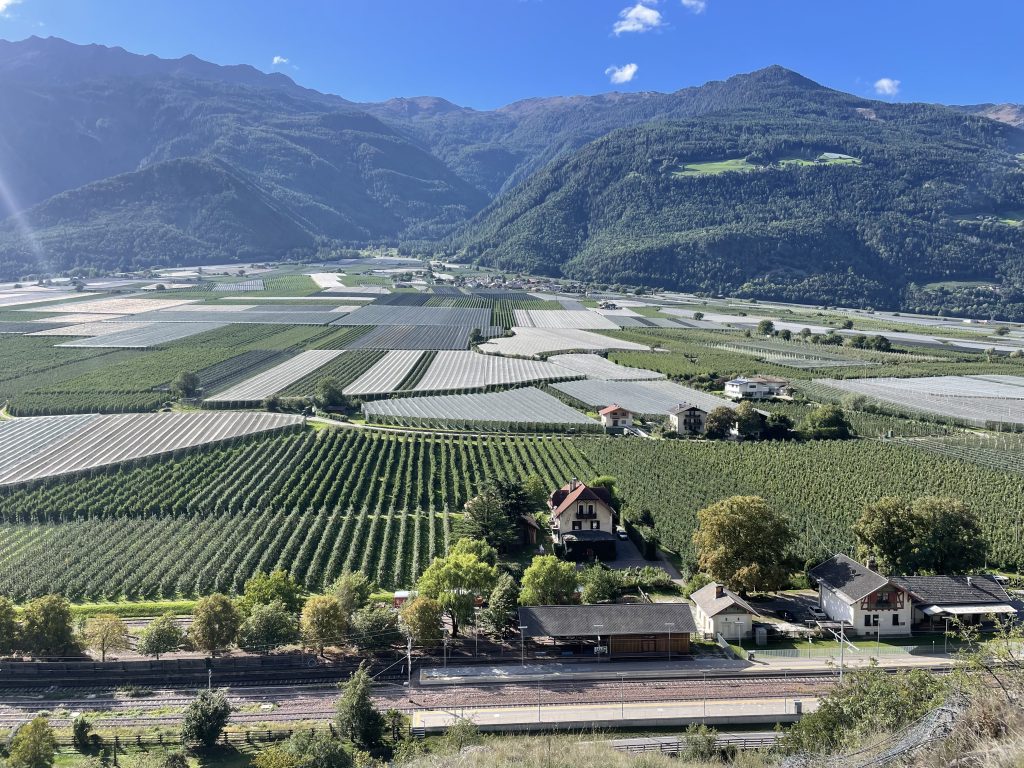
Apples everywhere
There was also a distinctly wealthy vibe. Houses and gardens were immaculate. Infrastructure is neat and tidy. Because of this regions autonomy they get to keep most of the tax receipts and reinvest them in the area. It’s both an expensive and affluent area.
Where to stay?
As we drove into the valley I started to look for somewhere to stay. It had been quite a long day with the descent of the Stelvio pass, in particular, requiring intense concentration. Paul didn’t want to drive much further but we didn’t want to spend a lot of money on what we thought would just be a quick overnight.
The options for bargain park ups seemed quite few and far between and we ended up in a car park next to a farm shop, a small bus depot and the main road through the valley. It really wasn’t very salubrious but we crossed our fingers that it would be quiet overnight. After parking up and paying we popped over to the farm shop to see what they had to offer. Obviously there were apples as well as more varieties of speck than we knew existed and local wine. We bought some schüttelbrot – a type of crispbread – along with some speck and cheese. We consumed our nibbles while watching the buses return to the depot and the last poor driver sweep each of them out and wipe down all of the seats.
Our overnight spot was also the overflow parking for Castle Juval which is one of the Messner Mountain Museums. We hadn’t heard of the museums before, but we did – of course – know of Reinhold Messner, the famous mountaineer who set so many firsts in the 70s and 80s. We decided we’d stay in the area a little longer than planned in order to pay Castle Juval a visit.
The castle can be reached by road, but there is no parking along the road or at the castle, so tourists have to either pay for the shuttle bus or walk up the hill. No surprise that we decided on the walk. It was a pretty steep hike up from the car park, with 530m of elevation gain in under 3km. Along the way we passed through orchards and vineyards and along water channels, crossing the switchbacks of the road every now and again. We saw people being dropped off at the shuttle bus stop where there was still a reasonable climb up to the entrance to the castle. This is not one for people who have mobility issues.
-
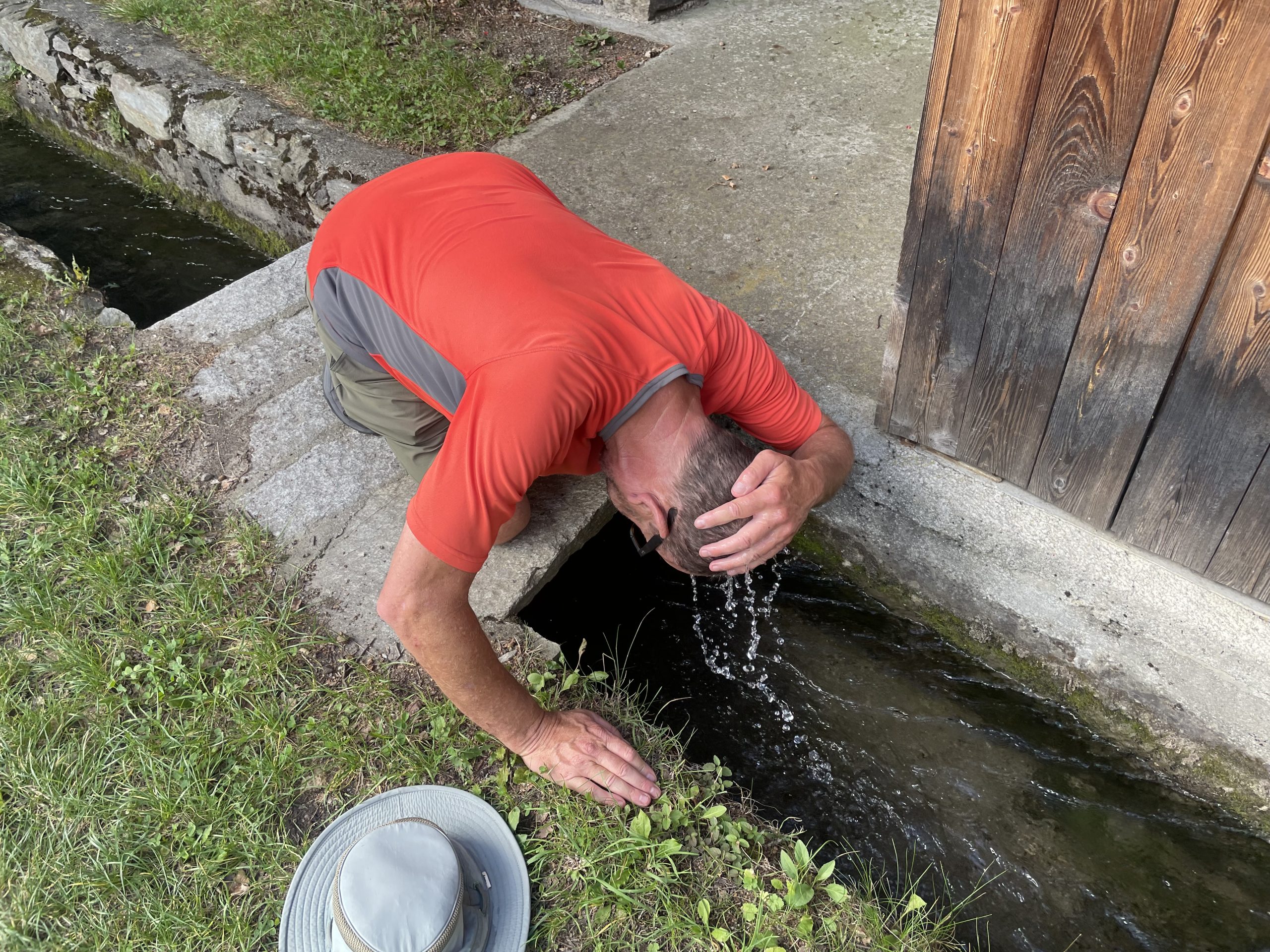
- Paul cools down in the aqueduct
-
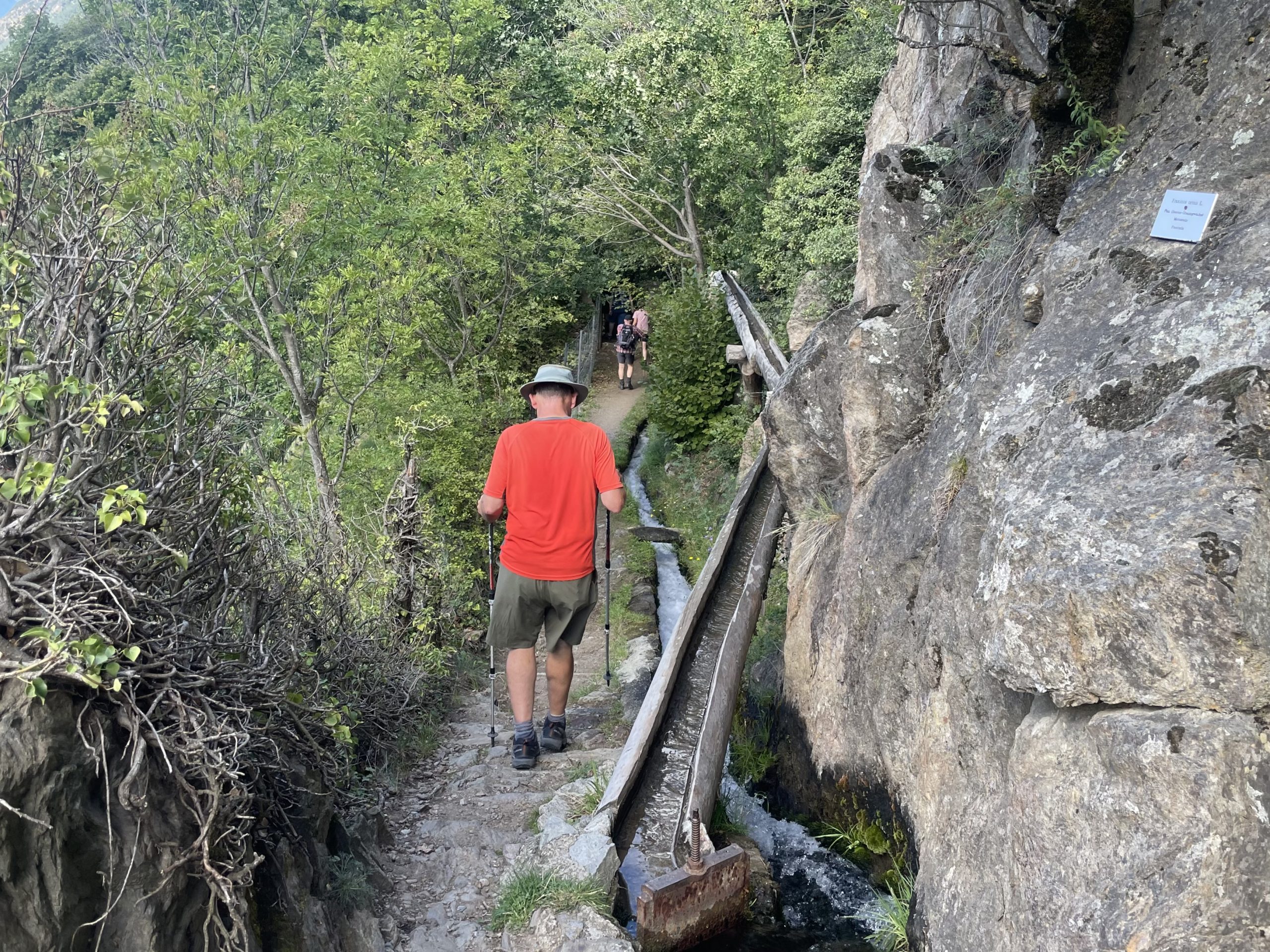
- Walking up to the castle
-
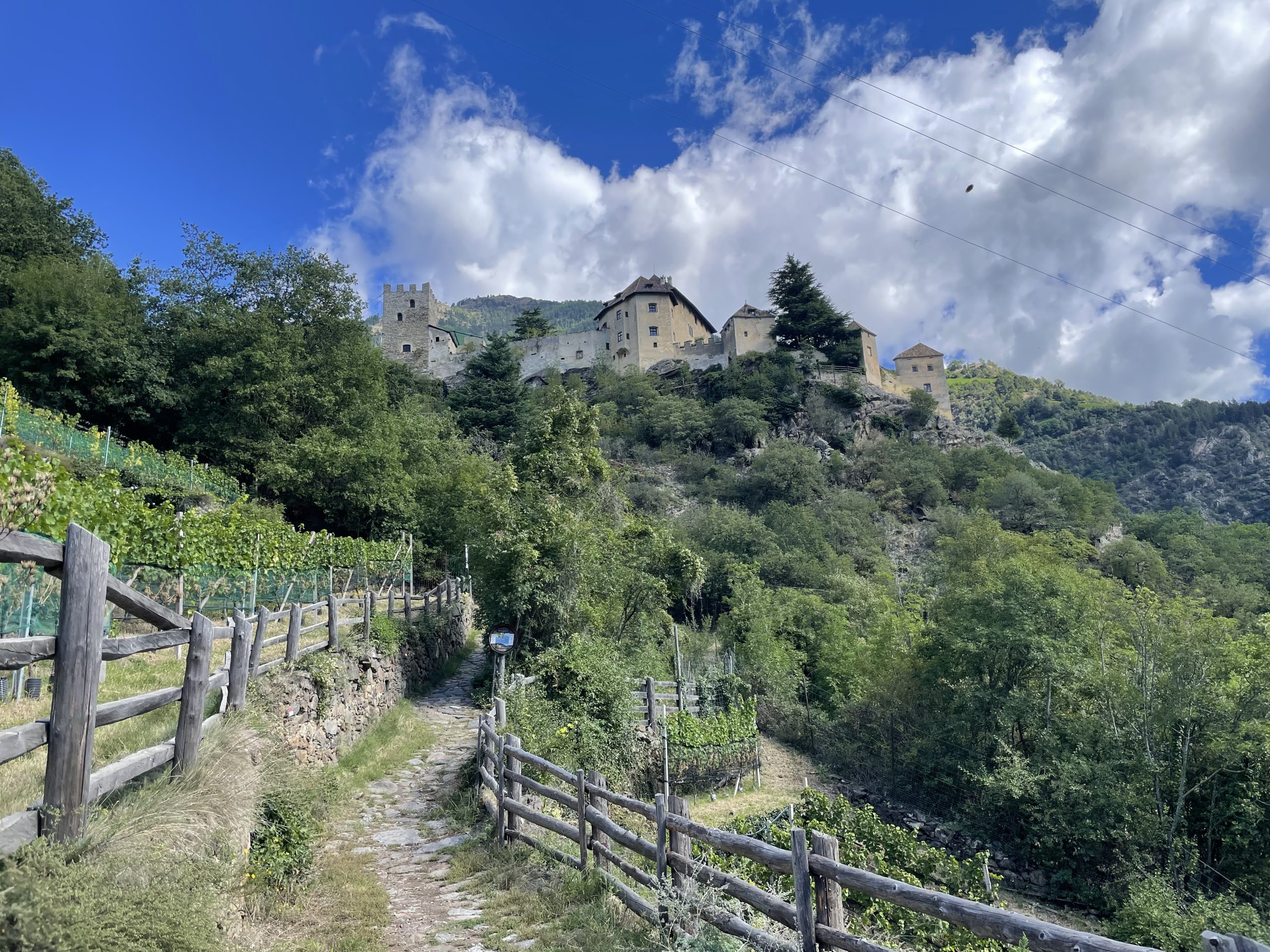
- We get our first view of Castle Juval
Juval is described as the Messner family home. I don’t know how often they are in residence, but there is certainly something homely about the castle. It has been renovated, but not excessively. Some areas have been left as ruin and some have been modernised with glass and steel. In between are the rooms that look more lived in; plaster, wood and stone.
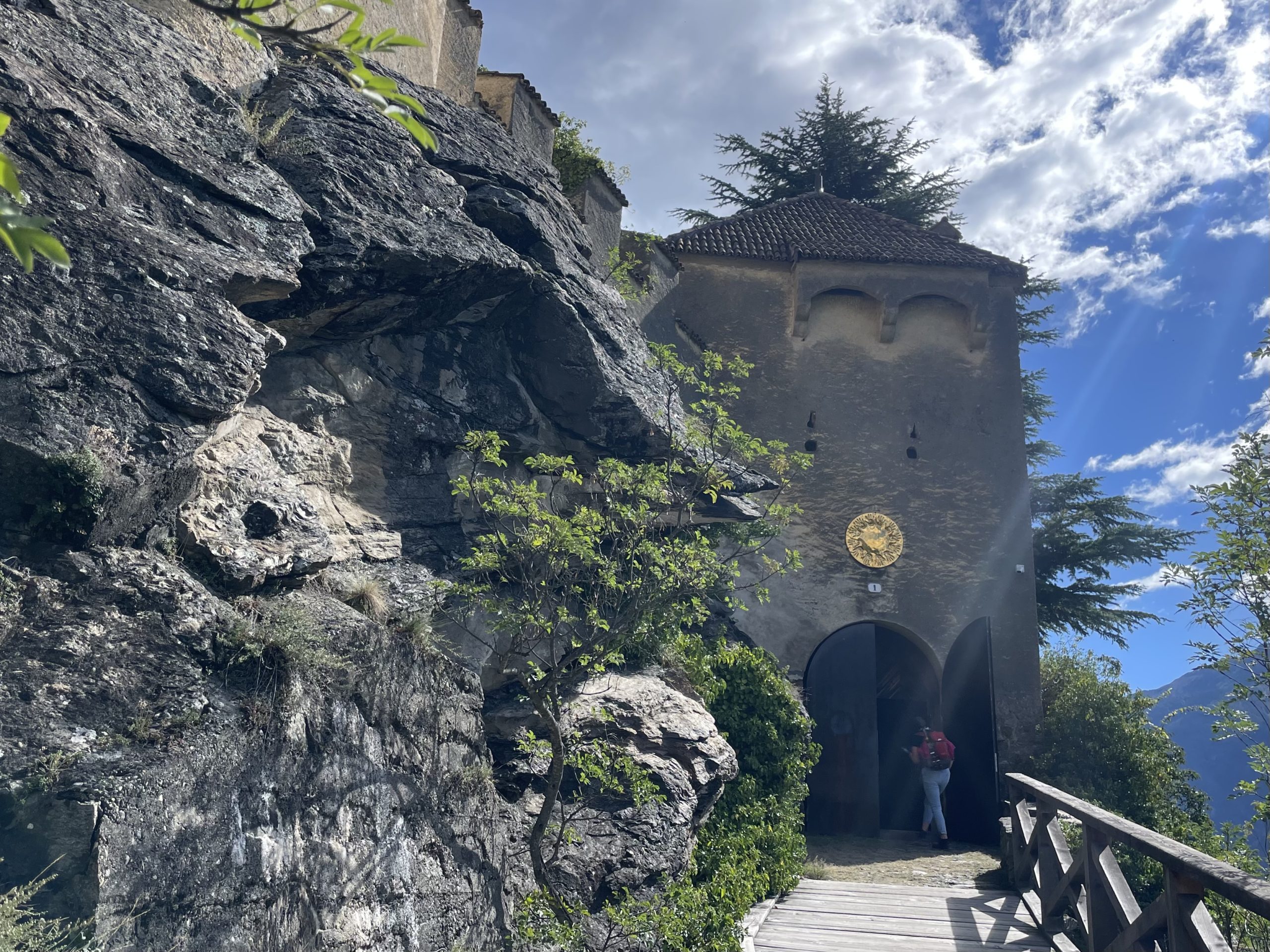
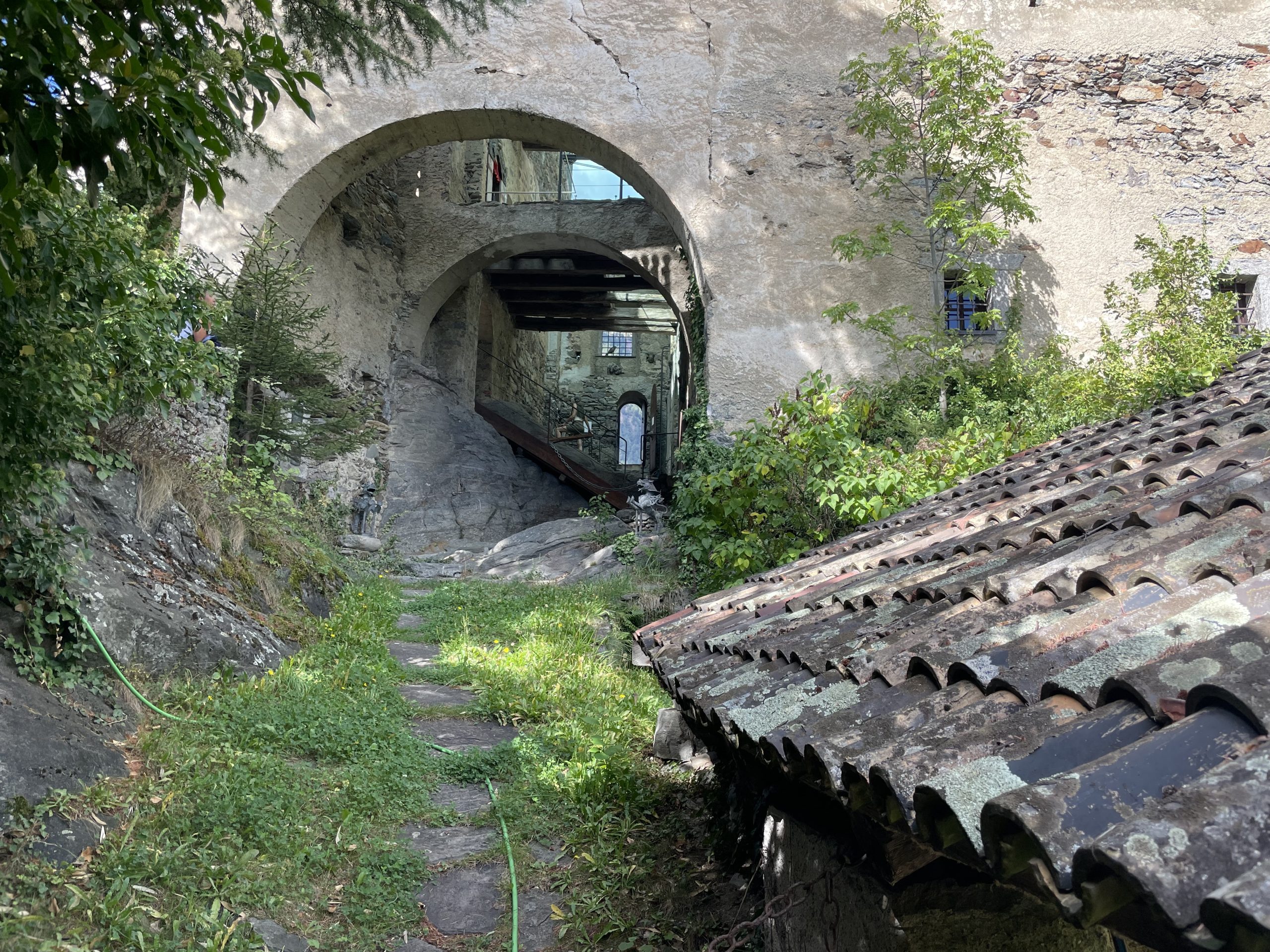
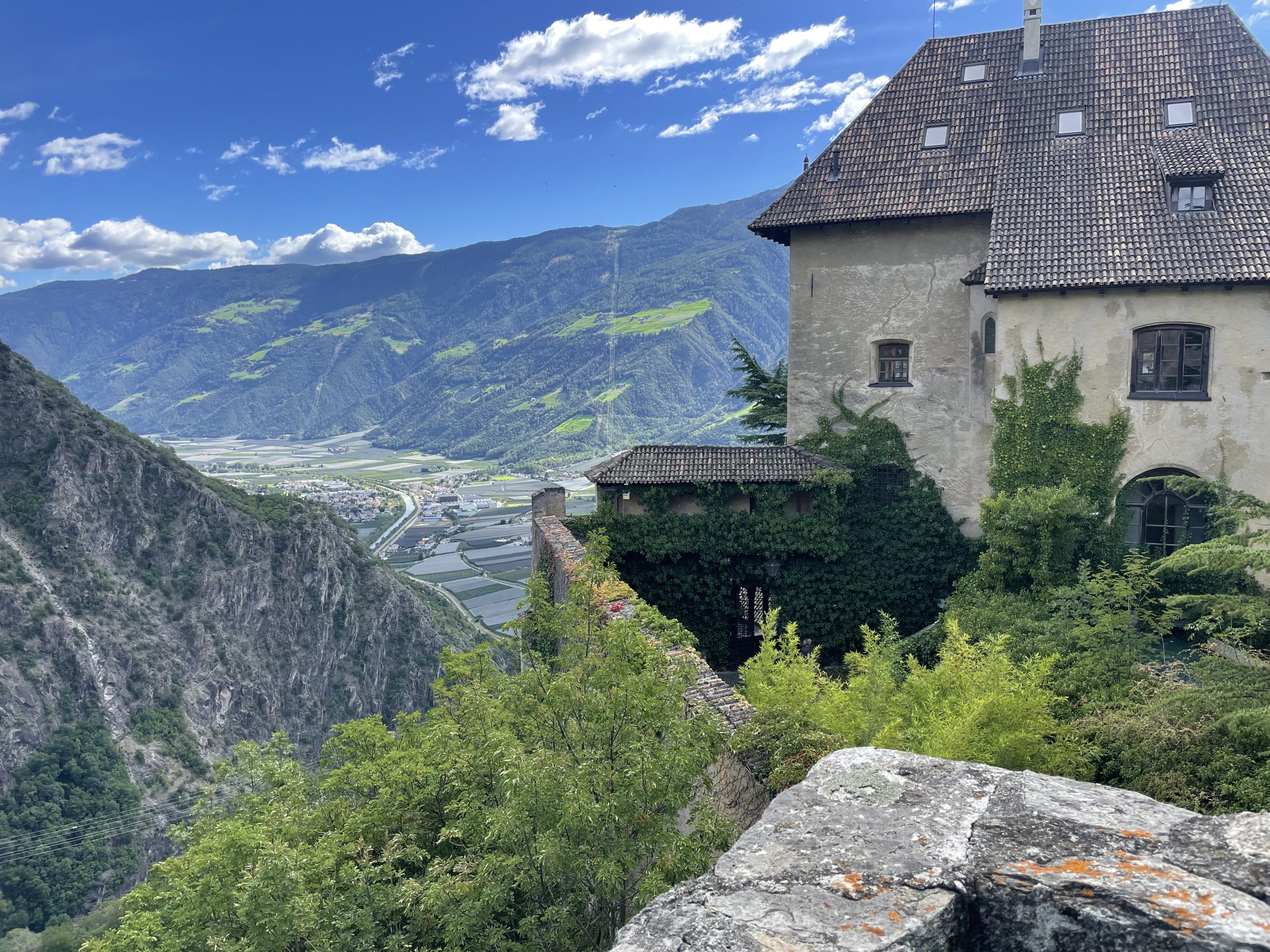
The museum areas hold a huge number of exhibits of sacred, mountain related, artifacts. Mostly from Nepal, but also from other mountain regions. Paul described it as Messner’s collection of tat from his travels, and it does feel like his holiday souvenirs, in that they are things which have been important to him on his travels. He obviously had the money and contacts to find a better class of tat than the average person.
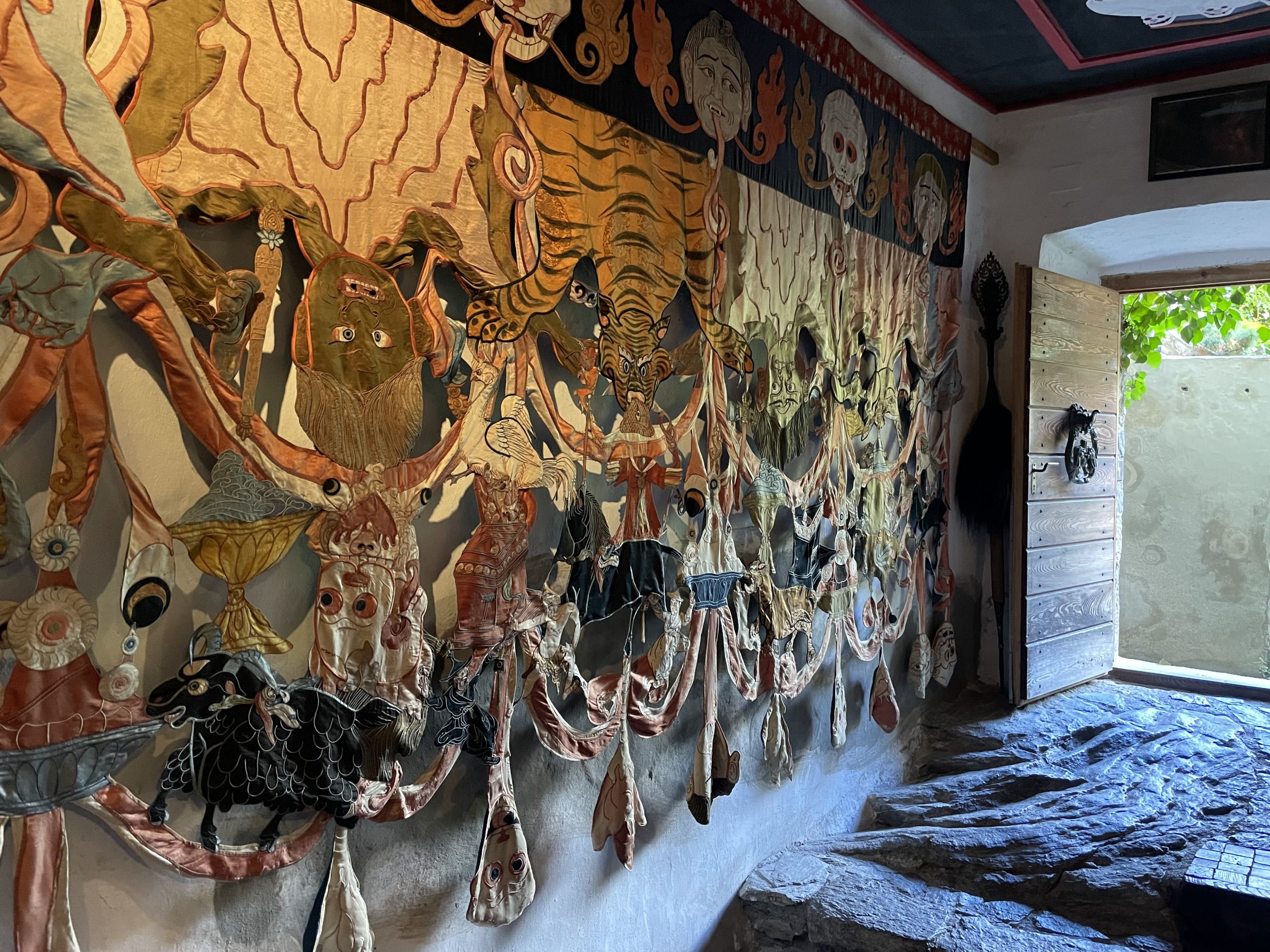
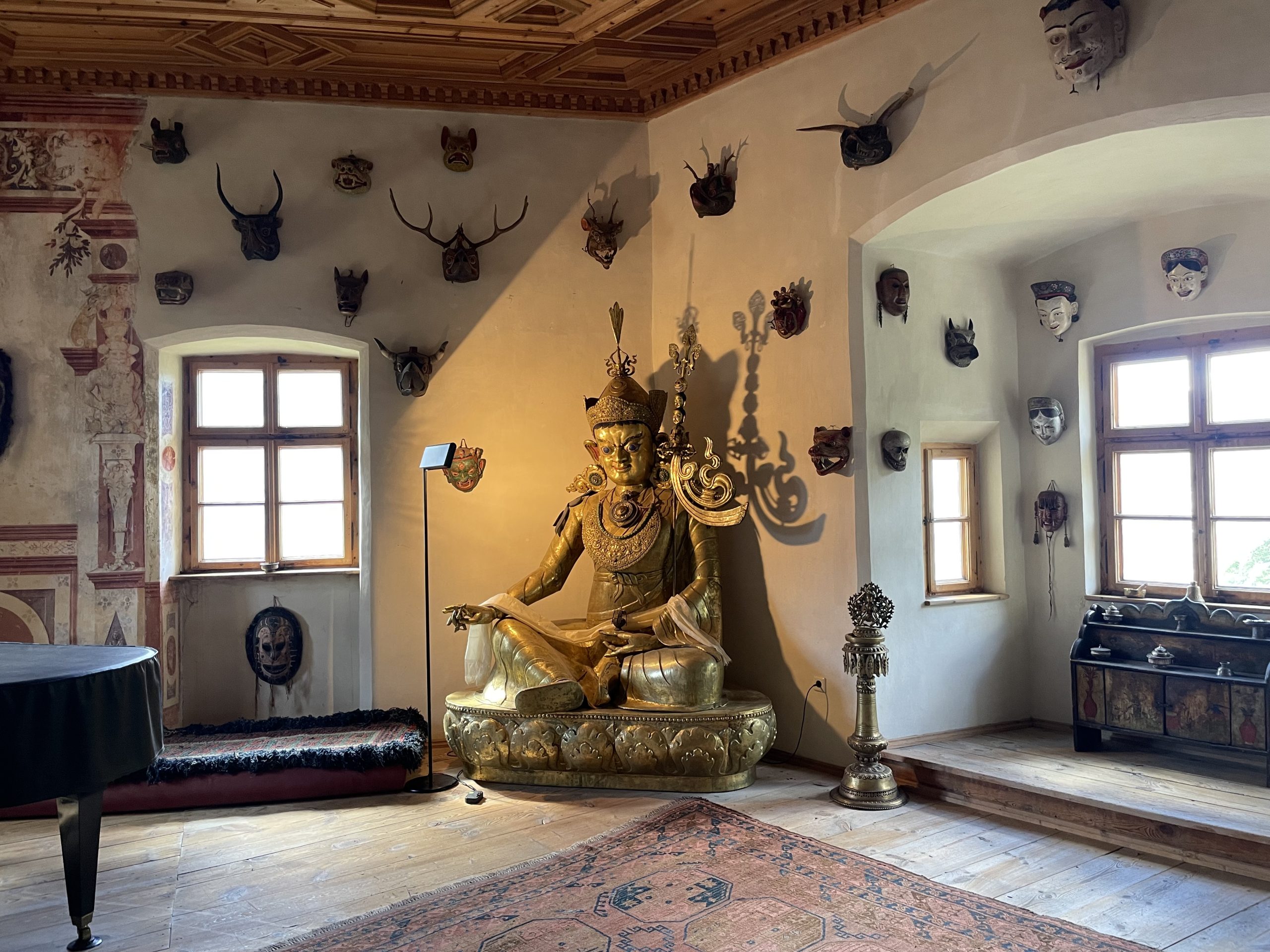
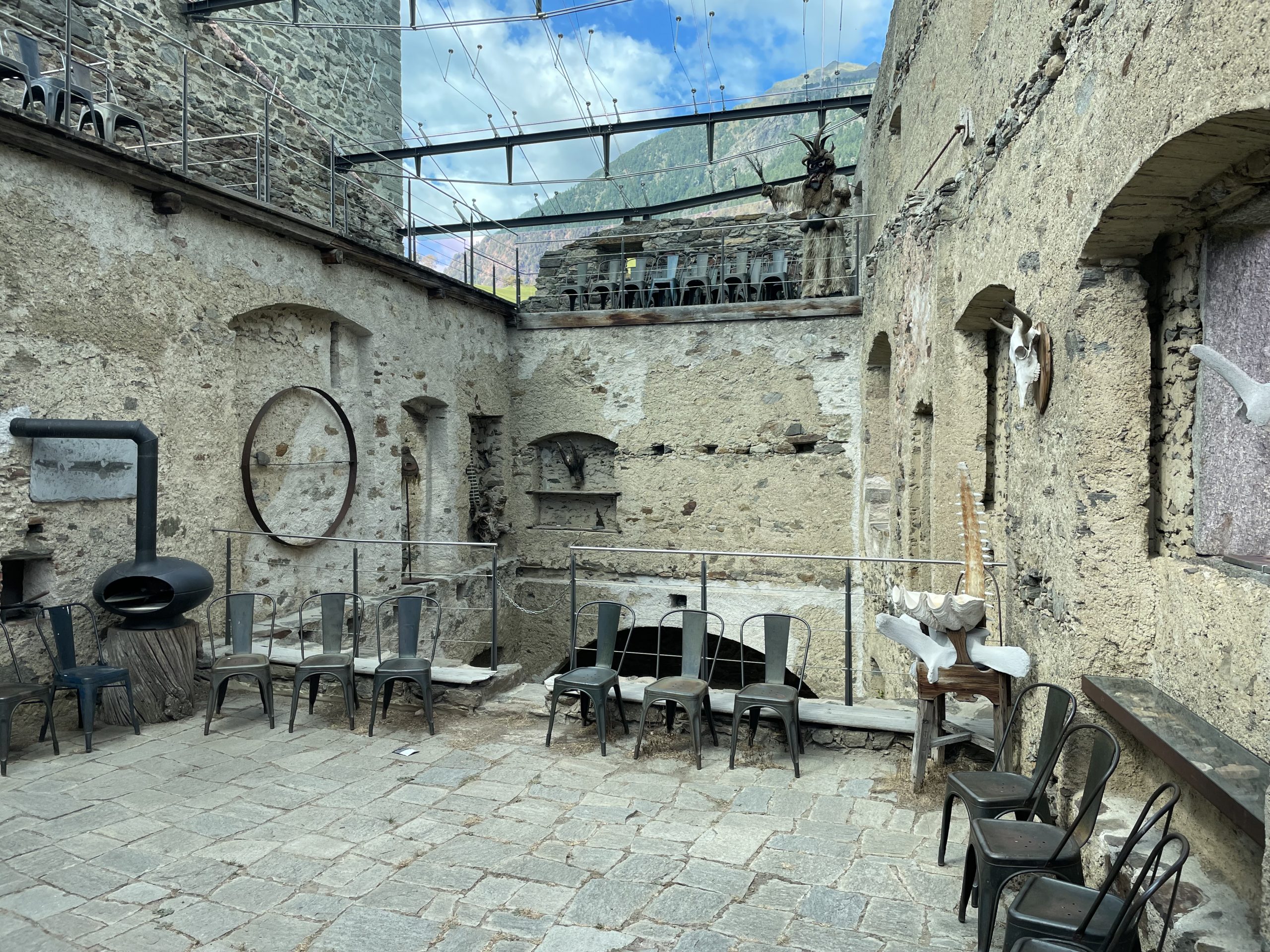
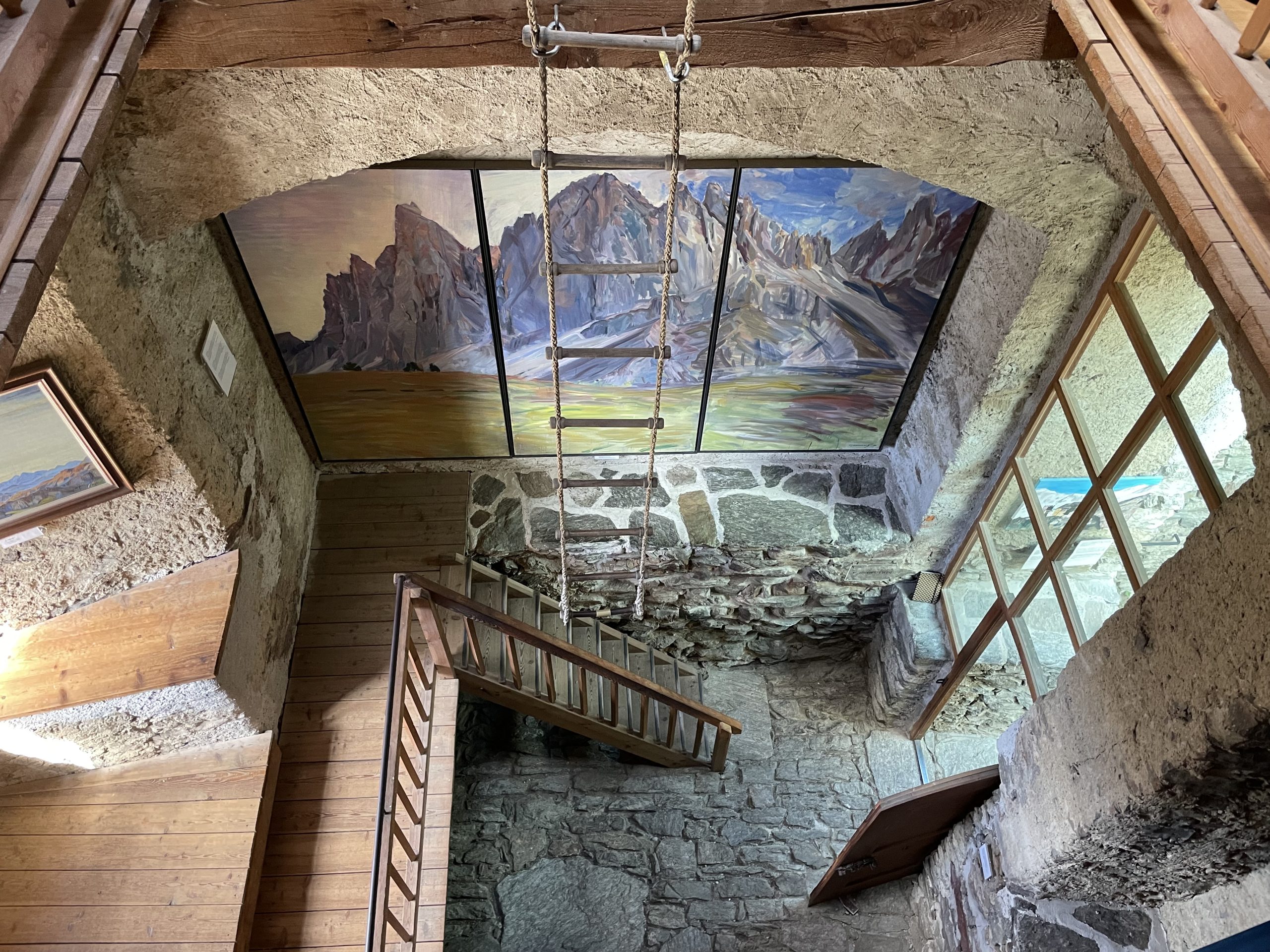
The central tower of the castle is lined with beautiful wooden stairs and galleries (and a very tempting ladder). Exhibits of mountain related art vie with the views.
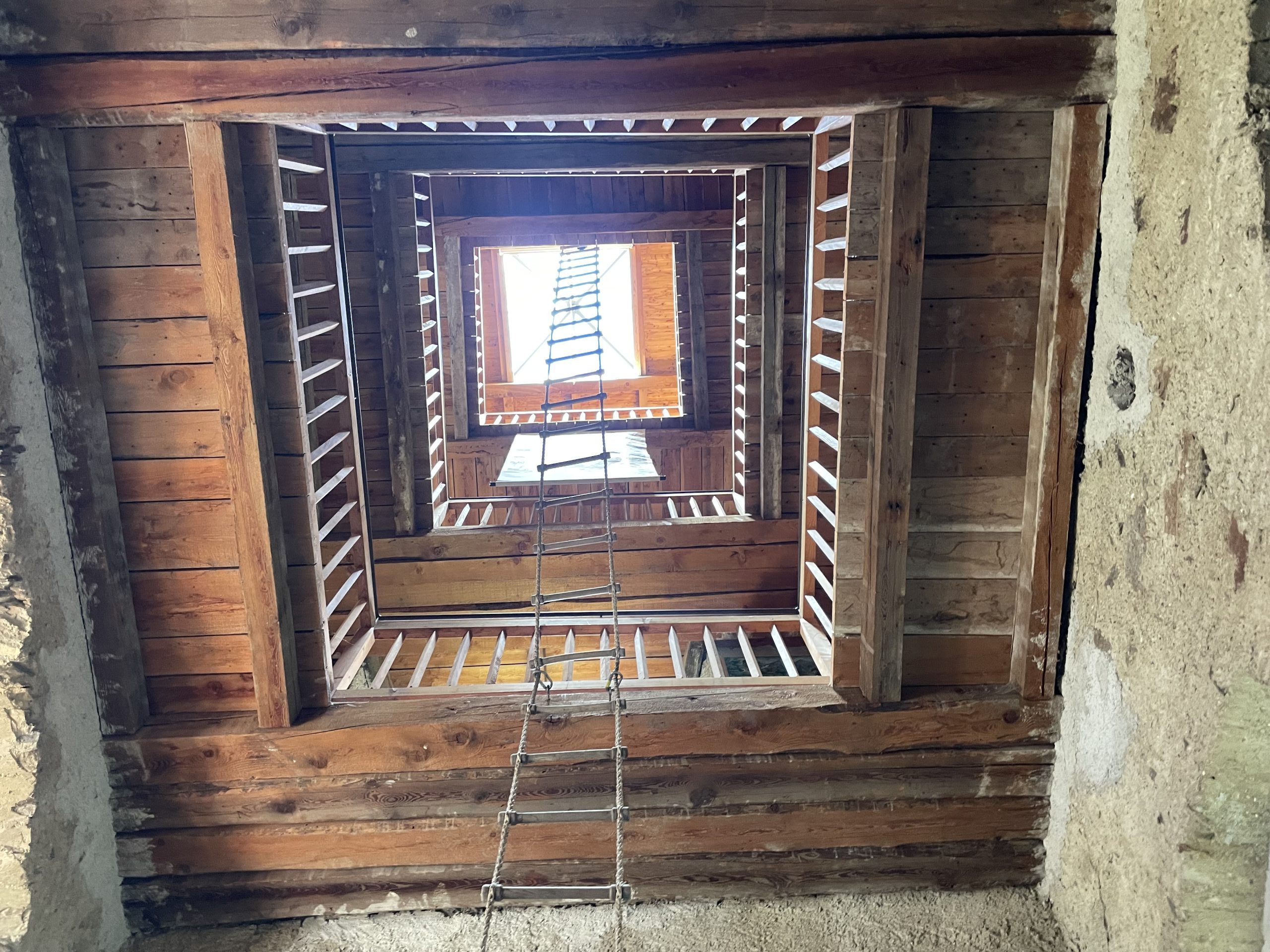
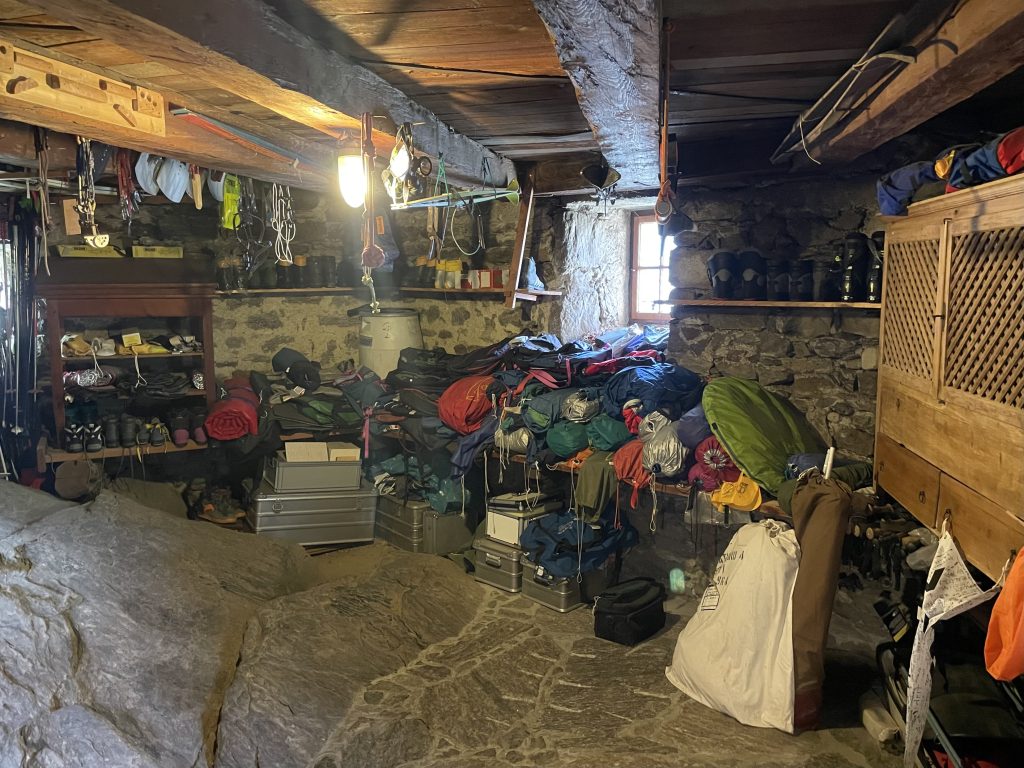
Along with the exhibits of mountain spirituality there are a few rooms of kit. We have a cupboard under the stairs. Messner has a whole cellar to prepare spaces for expeditions.
Wandering around was a really nice way to spend a morning. We were glad we’d accidentally stumbled on the museum. Would we visit other locations? Probably, if we happened to be in the area.