13/09/2026
From Livigno, freshly topped up with fuel, gas and vodka, we pointed ourselves back towards Bormio. We had a new objective in mind, somewhere we haven’t visited before. So we turned off just before we returned to Bormio town and headed uphill to the Passo dello Stelvio.
Passo dello Stelvio
It was Sunday, which meant we weren’t alone on the pass. A multitude of cyclists and motorbikers were making their way up the pass with us. Some faster and some much slower, a few looking as though they wished they had never started. Navigating the other road users, the hairpin bends and the sometimes narrow road was tricky and reduced the joy of the drive a little, but that was our fault for choosing Sunday for our ascent. When we were able to relax we enjoyed the spectacle of the road ascending above us.
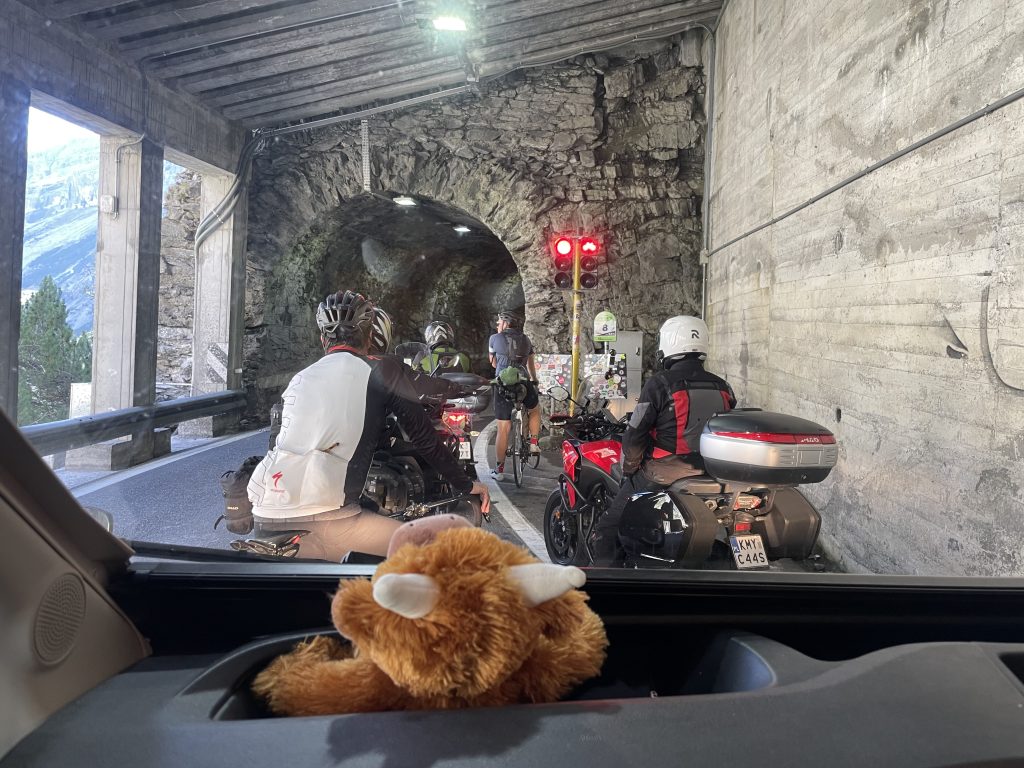
Waiting at the entrance to one of the tunnels with the bikes and bikers
As we approached the top of the pass (at 2757m the second highest paved pass in the Alps) there were photographers on the hairpins, waiting to snap an image of those passing on two wheels and looking a bit peeved when we accidentally photobombed them. I wondered how many people bought these images and whether it made waiting on the pass worthwhile. Maybe they only work on a Sunday, or are booked by biking clubs. It definitely seemed to be the motorcycles they were interested in.
-
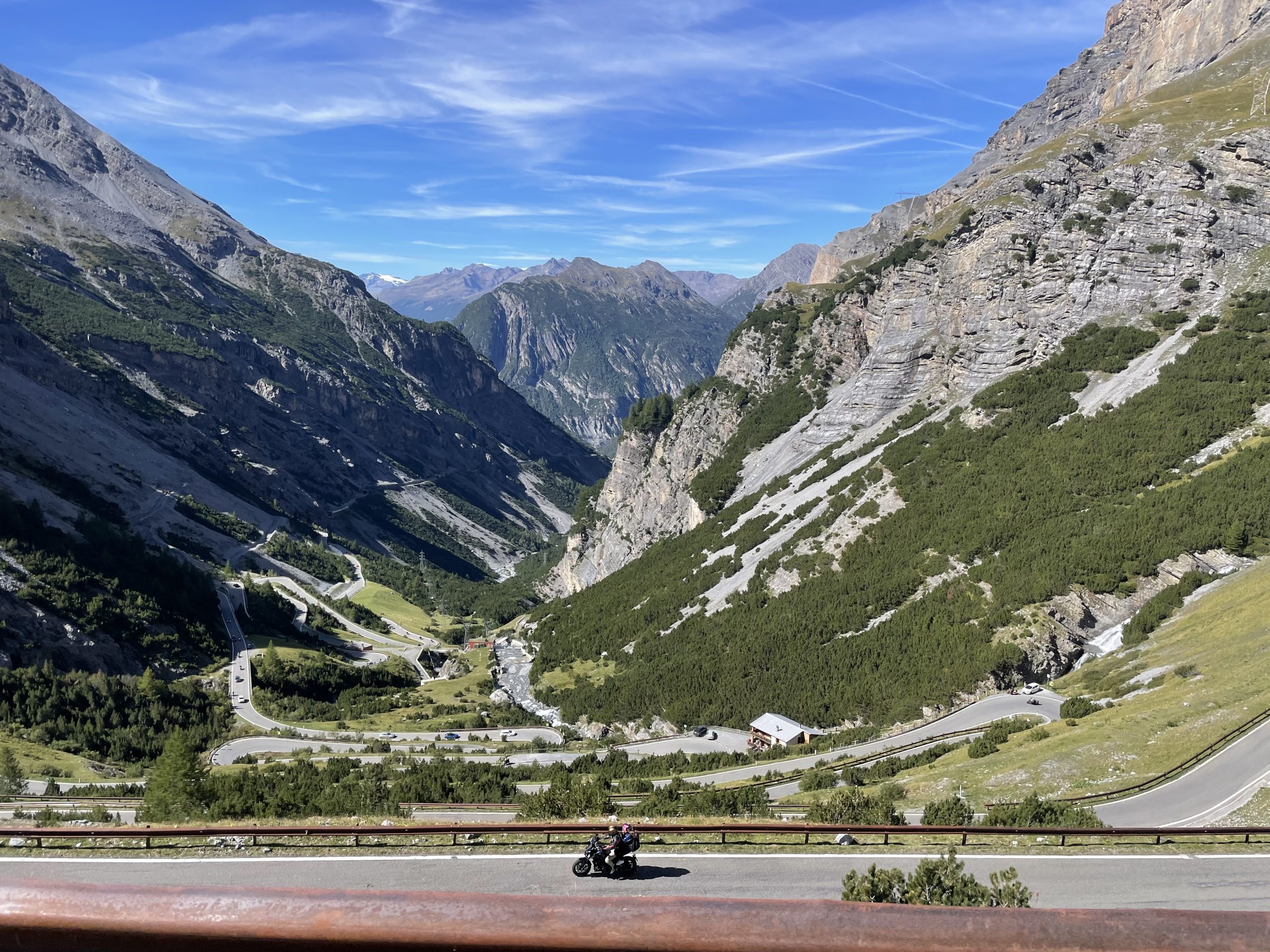
- View down the first section of the road, from near the Cascata del Braulio
-
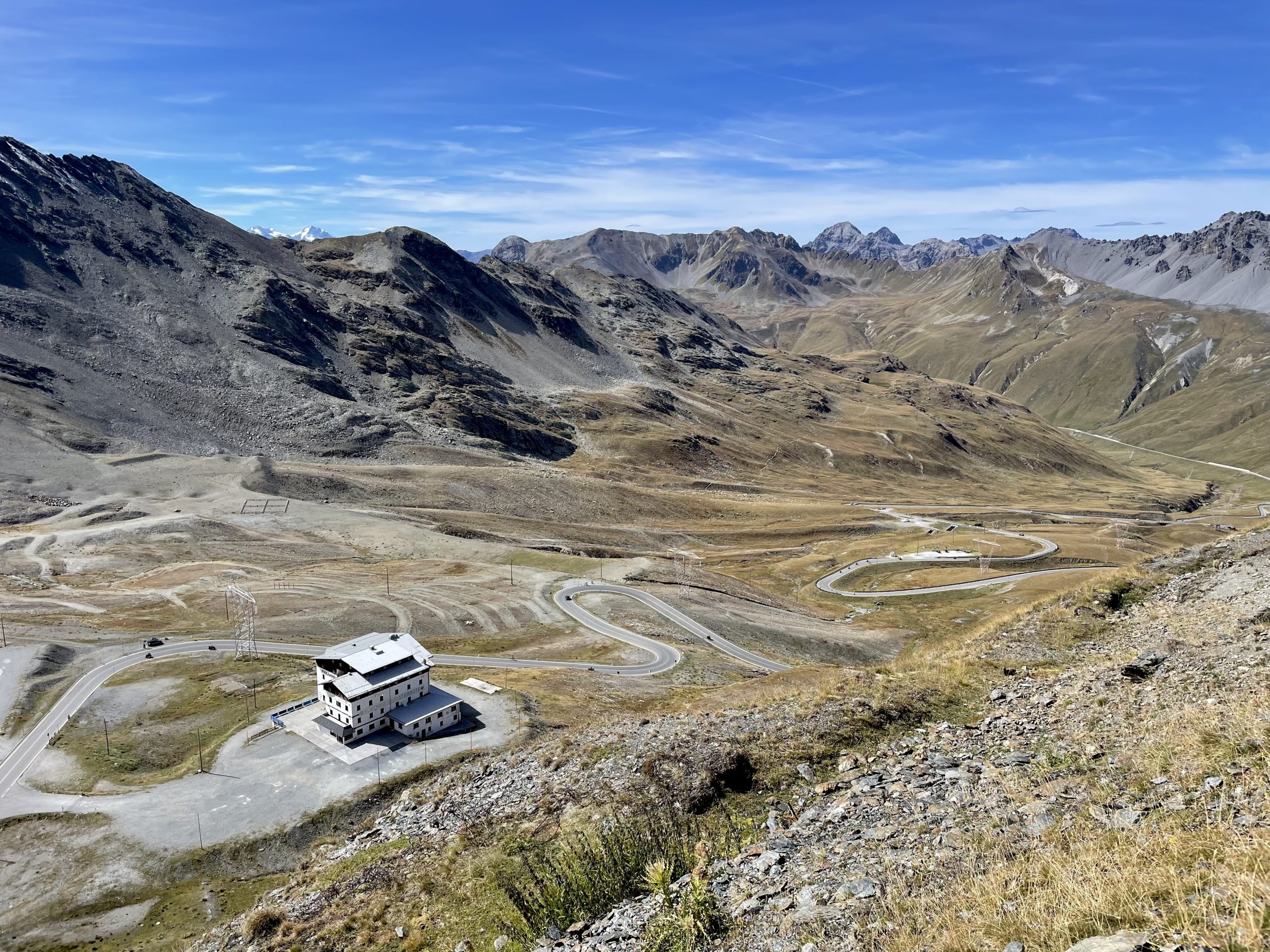
- The final wiggles on the way up the Lombardy side of the Stelvio Pass
At the top of the pass we had to navigate through the large gatherings of bikers, who cheered each new arrival (not us four wheelers obviously). The parking was actually really spacious once we had navigated all of the people and we found ourselves a flat space behind an empty hotel, just in case we decided to stay the night.
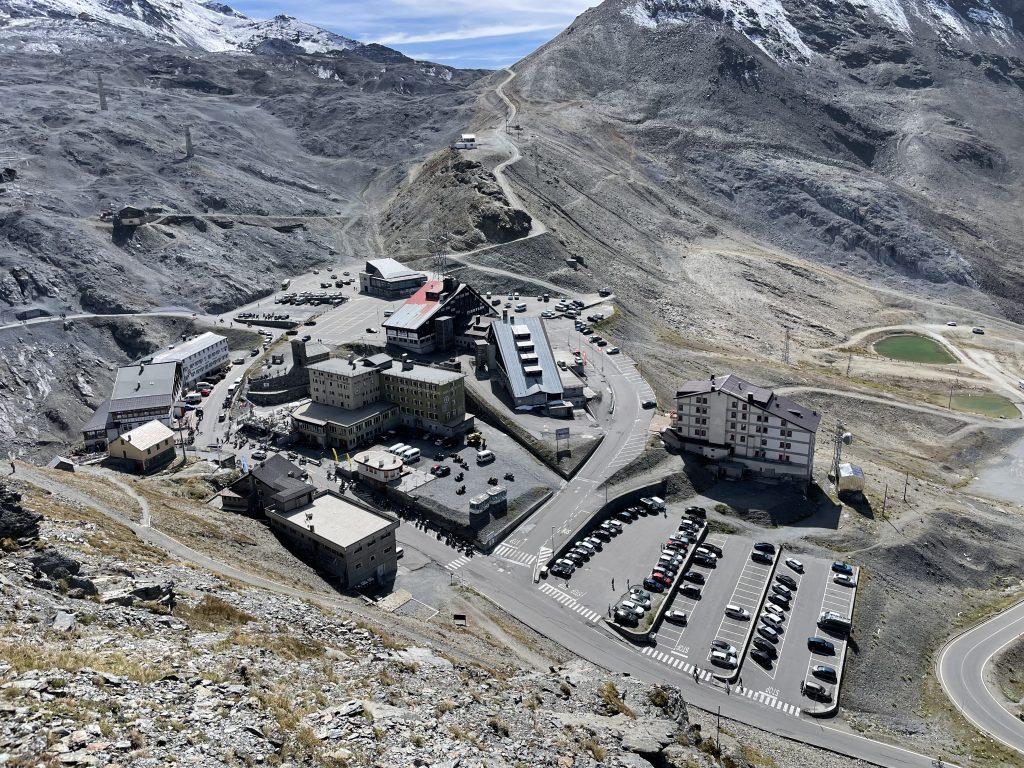
Looking down on the ‘village’ at the Stelvio Pass
We arrived as the ski resort was closing. Stelvio offer summer skiing on the glaciers, mostly used by athletes in training for the winter season. The resort cant be reached by road in winter so the lifts only run for five or six months each year. When we arrived it was the only one of the alpine summer ski resorts which was still open, all the others having been closed due to high temperatures. The lifts were only open for the morning though. They open super early – 7:30 normally and 5am if a club books an early session – taking advantage of the cool mornings but shutting at lunchtime to avoid skiing on the glacier when the temperatures climbed.
A walk around the pass
I tempted Paul out for a walk around the pass. There were plenty of people up here for the hiking which stretches out towards Switzerland and away from the higher glacier clad peaks. We followed a relatively easy path that took us up to the Dreisprachenspitze (three languages peak) and then traversing below the ridge to the disappointing puddle of the Lago d’Oro. We were following a short history trail, taking us to some of the fortifications which were so important during the 1st World War.
-
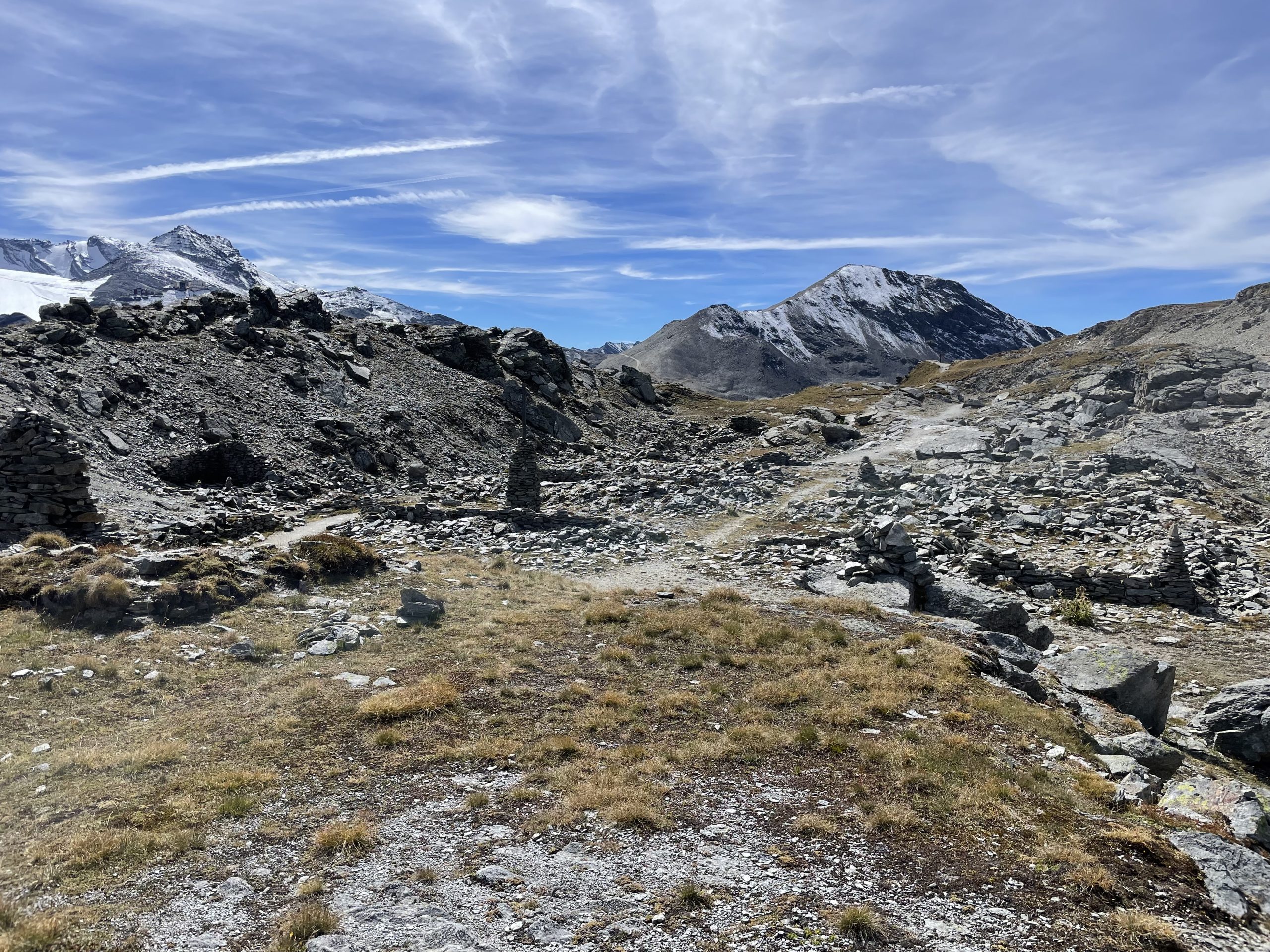
- Hard to make out, but these are the ruins of some of the fortifications
-
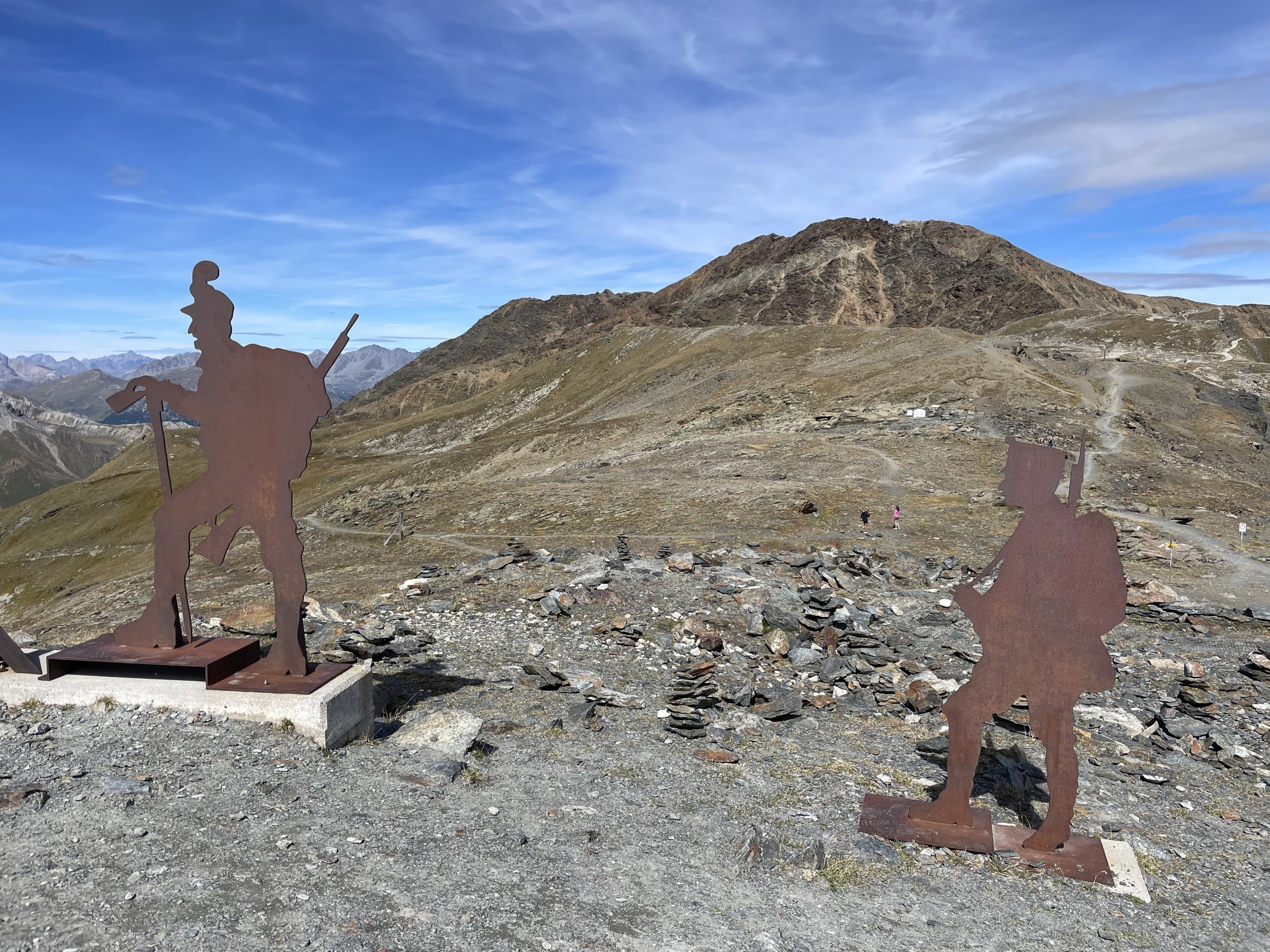
- Memorial by the Garibaldi mountain hut (which appeared to be closed for renovation)
-
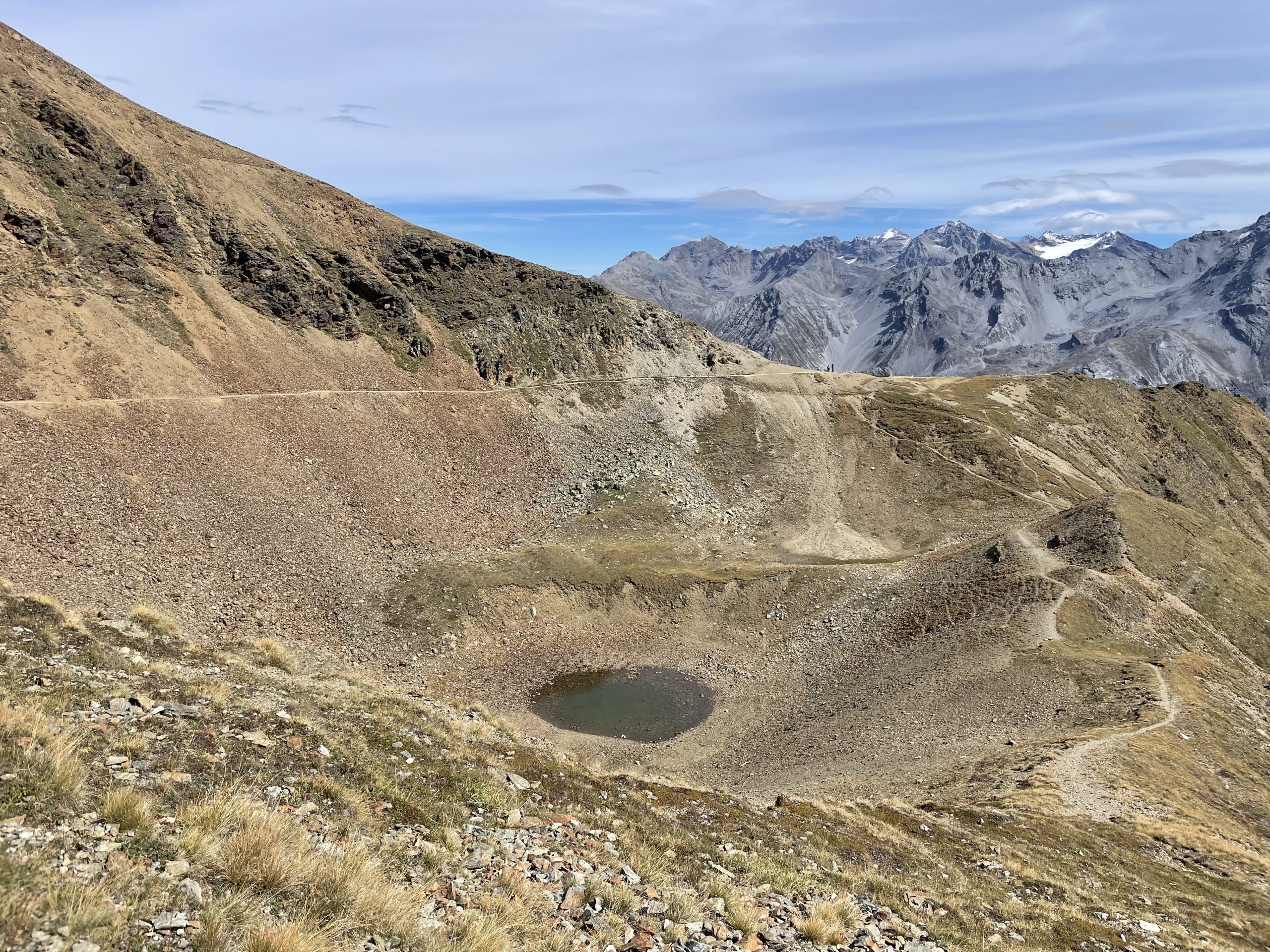
- And the ‘Golden Lake’ which was a little disappointing
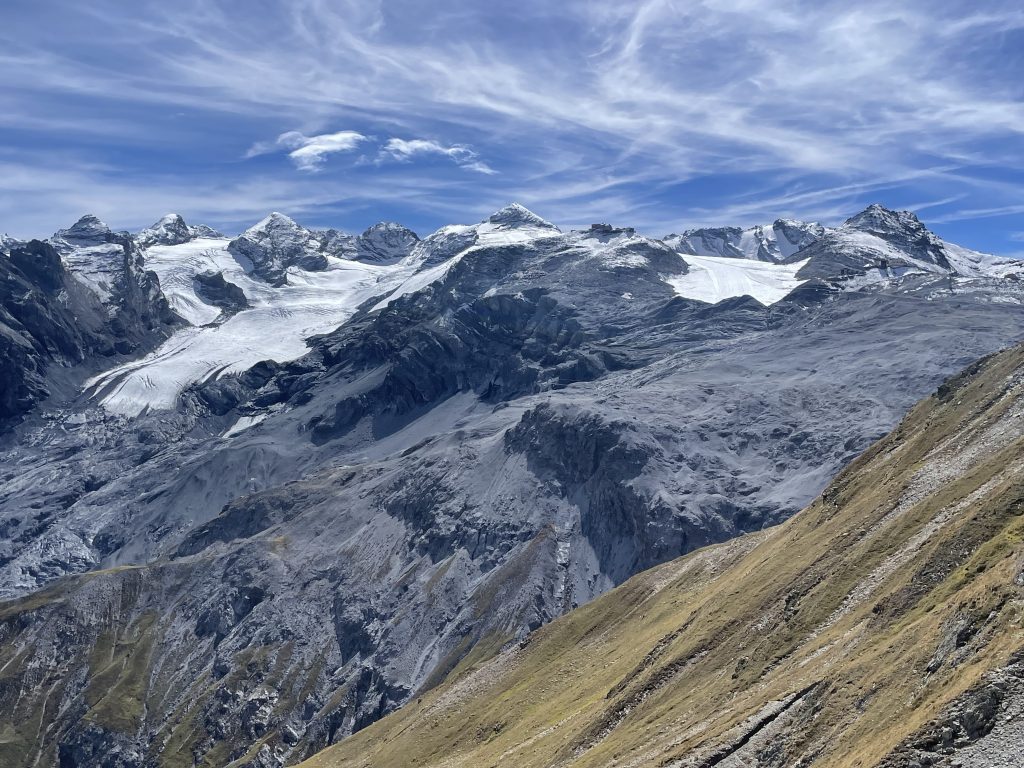
There are amazing views of the glaciers here
Originally the road across the Stelvio Pass had been built in the 1800s as a way of linking Austria with the Kingdom of Lombardy, then an Austrian province. By the time of WW1 Lombardy (the Bormio side of the Stelvio Pass) was part of Italy, but the other side of the pass was still part of the Austro Hungarian empire. Before WW1 broke out Italy was allied with Germany and Austria but they entered the war allied with Britain. The reasons for the change of allegiance being far too long to go into here, but one factor was the ‘secret’ Treaty of London which promised the territories of Trento and Trieste to Italy. So the Stelvio Pass became an important frontier during the war, and even the Swiss had a base up here to ensure that the war did not spill over into neutral territory.
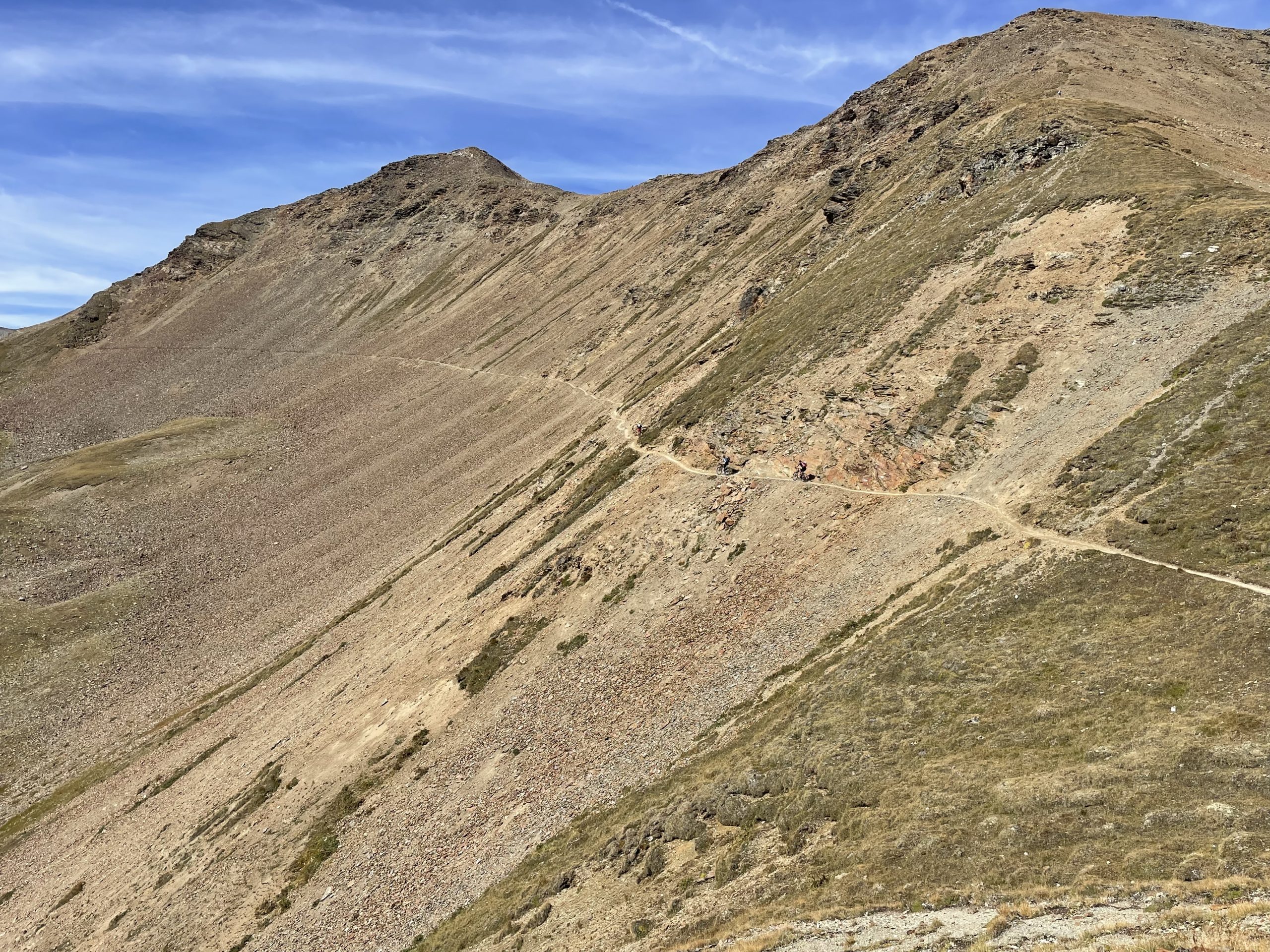
Along the walk we could see the huge Bearded Vultures overhead but were disappointed not to see any other wildlife. Maybe it was all the other hikers, or even the mountain bikers who were navigating our path, bravely cycling next to the steep drop. At one point a hiker on the path above us knocked a stone down towards us. It was an ‘oh shit’ moment as I heard it tumbling down. I just ran without even thinking to alert Paul to the danger (his hearing isn’t great). Luckily the stone slowed to a stop about a meter above us and Paul survived rather than being skittled down the mountainside.
And down the other side…
After our walk we decided to drive down the pass rather than stay up in the cold. We definitely want to come back here to do some more hiking, but maybe at a time when we aren’t focussing on visiting bike parks.
The other side of the pass is the steeper and more winding route. Even in a short van we had to treat many of the hairpins as junctions, approaching carefully and avoiding the ascending cyclists and drivers, particularly the approaching cars who were nearly all cutting the corners. The road on the Trento side of the pass has 48 of these hairpin bends and much narrower roads.
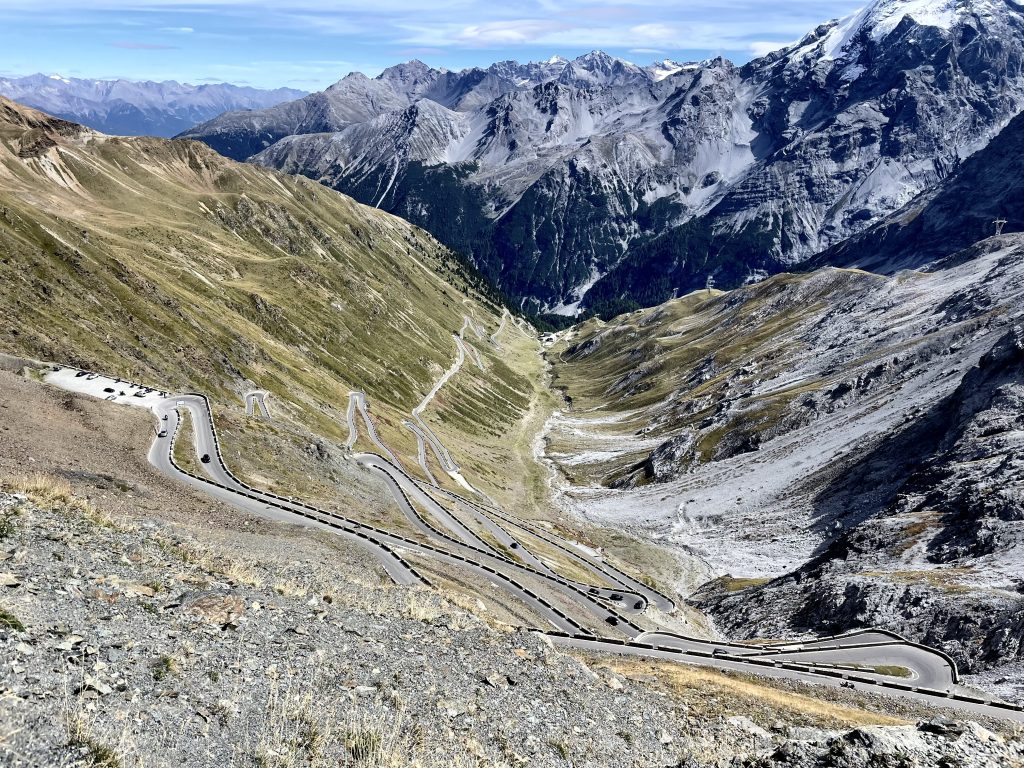
The beginning of the descent, viewed from our walk
We had crossed the Stelvio Pass, moving from old familiar favourites to places we have never explored before.