26/10/2025
Deciding where to park in Oslo was a bit of a mission. We didn’t really want to pay for the only open campsite, at nearly £40 a night it felt like a waste of money given that we didn’t need campsite facilities and we wouldn’t be spending long in the campsite itself. Plus it was a long way out of the city so didn’t even have convenience in it’s favour.
Parking in Olso
Aside from the campsite, the city didn’t seem to have much to offer. The marina motorhome parking closed in mid September (I assume it is used as an area for boats that have been taken out of the water) and was even more expensive in any case. And ‘stealth’ park-ups in big cities tend to be awkward. We didn’t want to be somewhere on a noisy street or causing a nuisance in a residential area.
So we cast our search area wider, looking for places outside of the city where we could use public transport. We found some possible parking on the northern outskirts of the city, in the recreational and ski area of Frognerseteren right at the end of one of the metro lines. That gave us a target and we hoped it would check out as we didn’t really have any other options apart from the campsite.
Getting to our parking was a real culture shock. We’ve been driving quiet roads where spotting another vehicle was an exciting event. Even the E6 had been quiet and easy going. But Oslo! Oslo was city driving, people who had to be places and do stuff and were mildly (this is Norway after all) impatient to be at their destination. We stared at each other in shock. It turns out that the population of the urban area of Oslo is around a fifth of the total population of Norway. Norway’s general population density is 15.48 people per km² but rises to 3300 people per km² in the Oslo area. That’s a big difference in the number of cars on the road.
We should be used to traffic, but it’s been a while and it took some getting used to. All the way up to the recreational area we were confronted with people. As we got higher we drove past the impressive Holmenkollen ski jump and stopped for a photo. Around the ski jump we watched people using the purpose built tracks to train for winter skiing using their roller skis. Even the recreational area was busy.
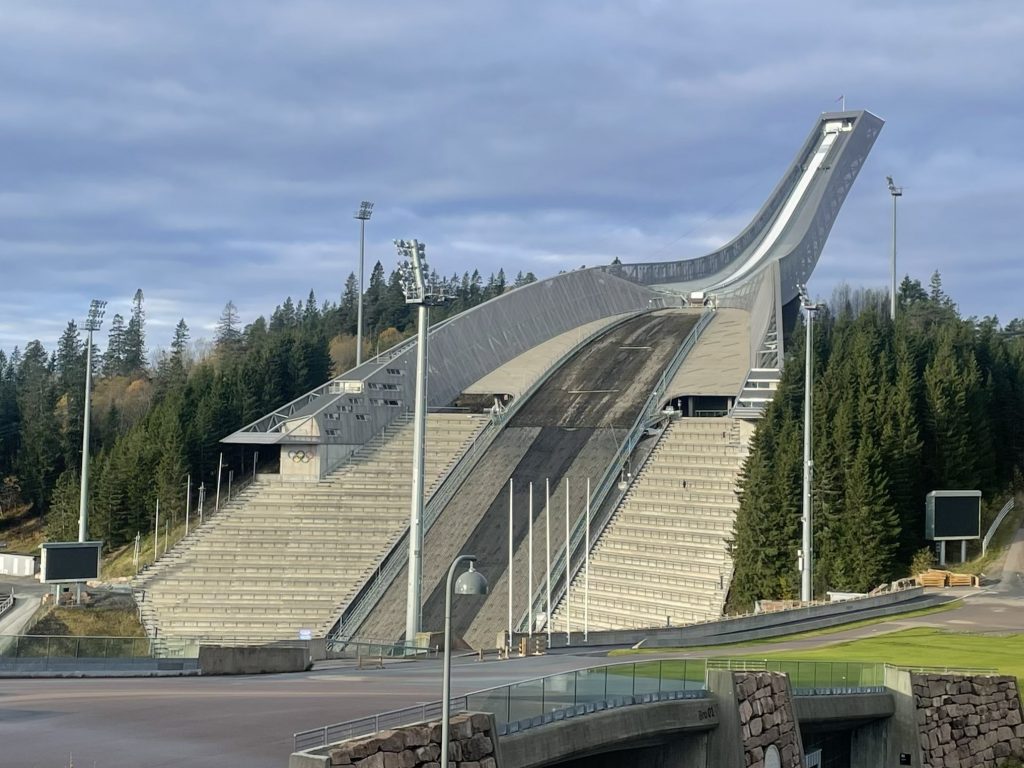
The ski jump is an impressive feature in the hills above Oslo
Our parking was just beyond a restaurant that specialises in catering for events. There were no restrictions so all looked good, a couple of other vans were parked up too but not so many that it felt uncomfortable. The only issue we could foresee was if a big event was due to take place and we were blocked in.
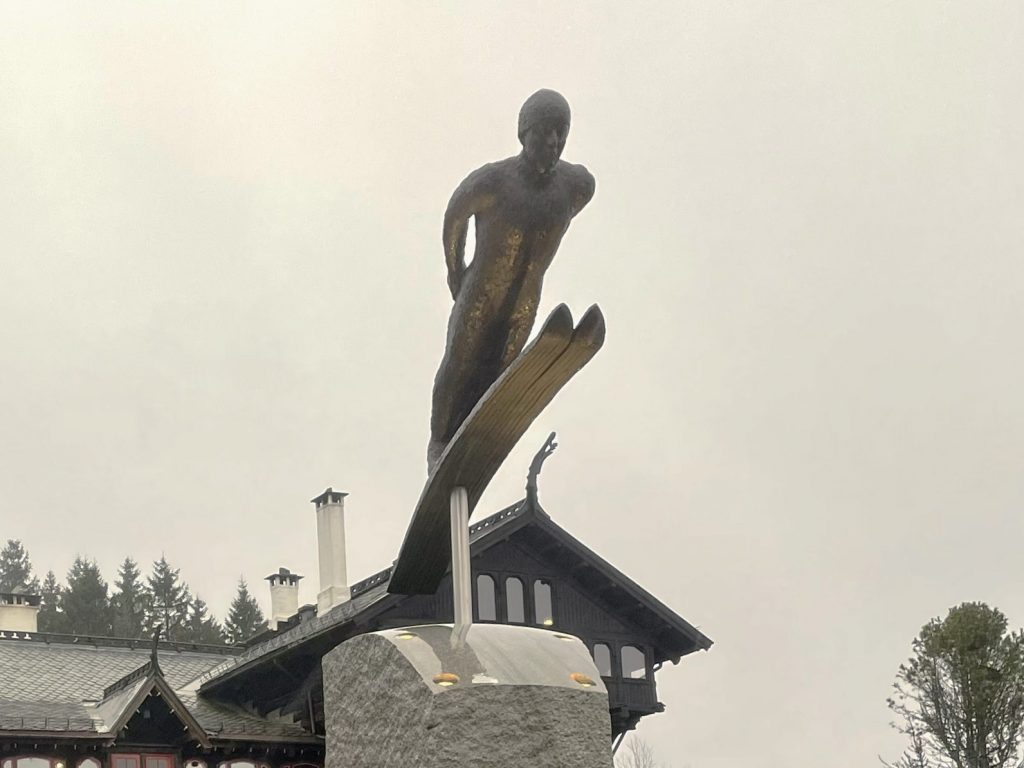
The Ski Jumper – sculpture near our parking spot
For the remainder of the afternoon we went for a walk around the recreational area, checking out the metro station and sussing out some possible alternative parking spots – all of which had No Campers signs clearly displayed. We had obviously chosen the right option. We noticed that mountain bikers were using the metro as a lift to bring them up to the recreational area before hurtling down a couple of stops and then repeating. It was very tempting.
Travel into Oslo
The following morning we were up bright and early to spend a day in the city. First of all we bought our day travel tickets using the Entur app. These break even at the third public transport journey so were only just worth it for us, but paying for a single ticket each gave it the convenience factor.
We made our way to the metro station and got comfortable in the clean and peaceful metro for our 50 minute journey downhill into the city. As usual in Norway the system operates on trust, ticket checks are random and infrequent rather than happening on every journey. The views were far reaching over the sea but the weather was cloudy so we didn’t get any good photos. I imagine it’s glorious in the sunshine.
Vigeland Sculptures
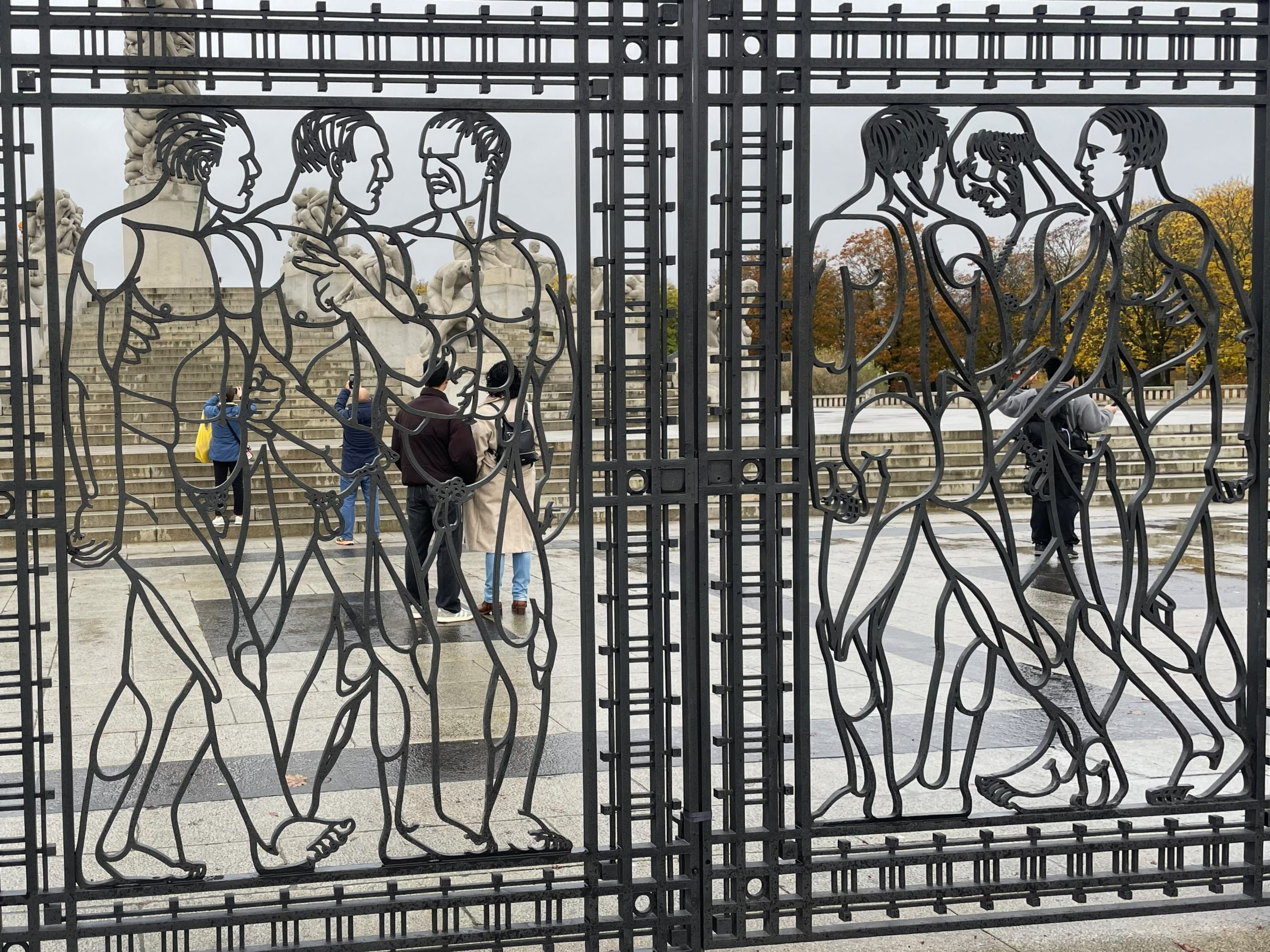
Our first stop was the Vigeland installation in Frogner park. This collection of over 200 sculptures, mostly in hard Norwegian granite, but also in bronze, is somewhere you could spend hours. There is no charge for visiting the park and viewing the installation but there is a small cost for the museum just outside the park. The majority of the sculptures are human forms, of all ages and in all emotional states from joy to sadness, love to despair. They were mostly based on real people who had modelled for him. As I wandered around I thought about how my Dad, a keen photographer who appreciated the human form, would have loved this.
Vigeland was a sculptor and stone mason in the early 20th century. He worked on the restoration of Trondheim cathedral and then moved to Oslo where he was commissioned to make sculptures for various dignitaries following Norway’s independence from Sweden. When the city council wanted to demolish Vigeland’s home and studio, they offered him a new location and in return he donated the rest of his sculptures to the people of Oslo. Thus was the installation in Frogner park conceived and we think this is a must see. We took a lot of photos, here are a few that caught our eyes.
-
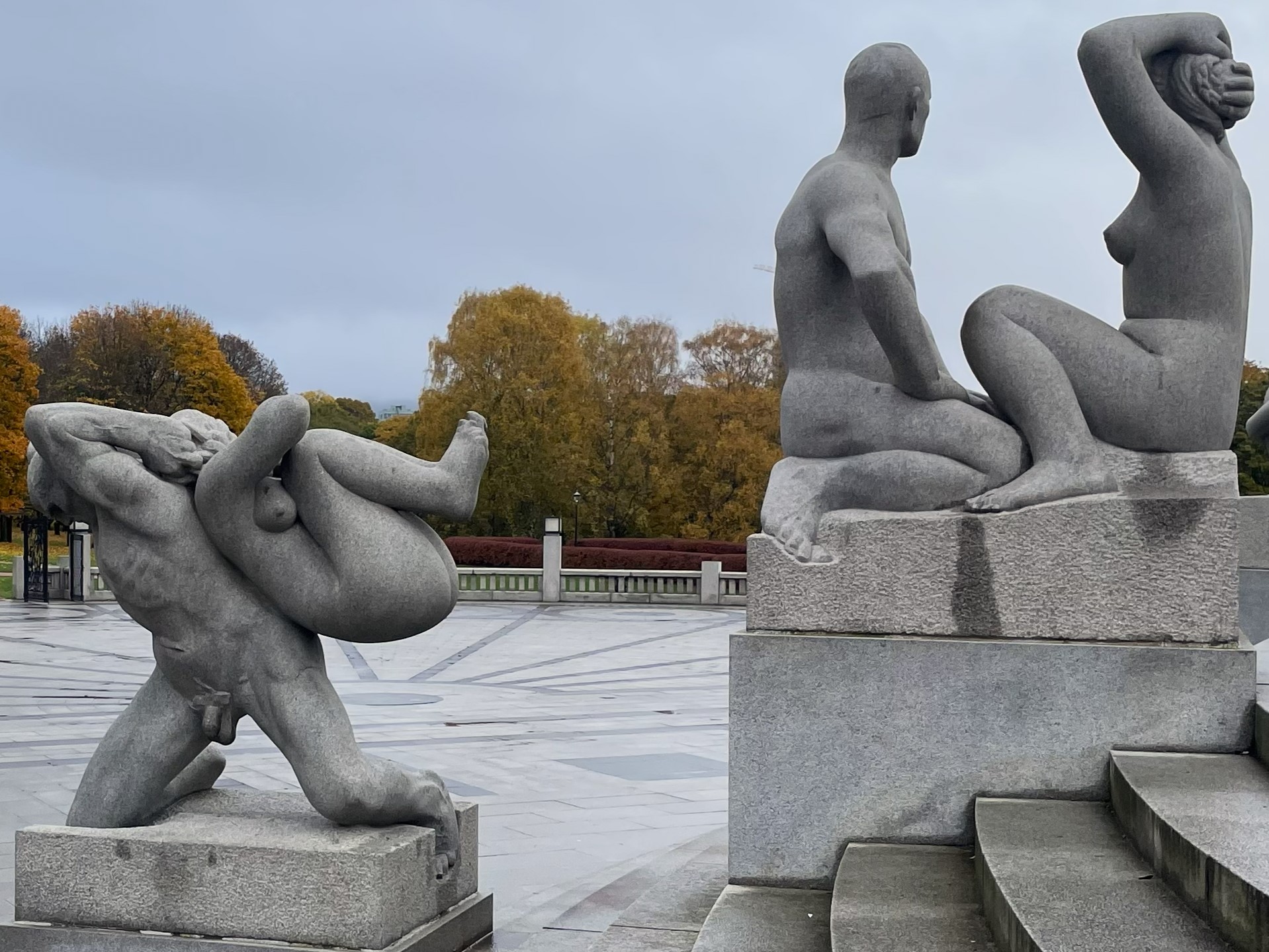
- I love the couples here supporting and carrying each other.
-
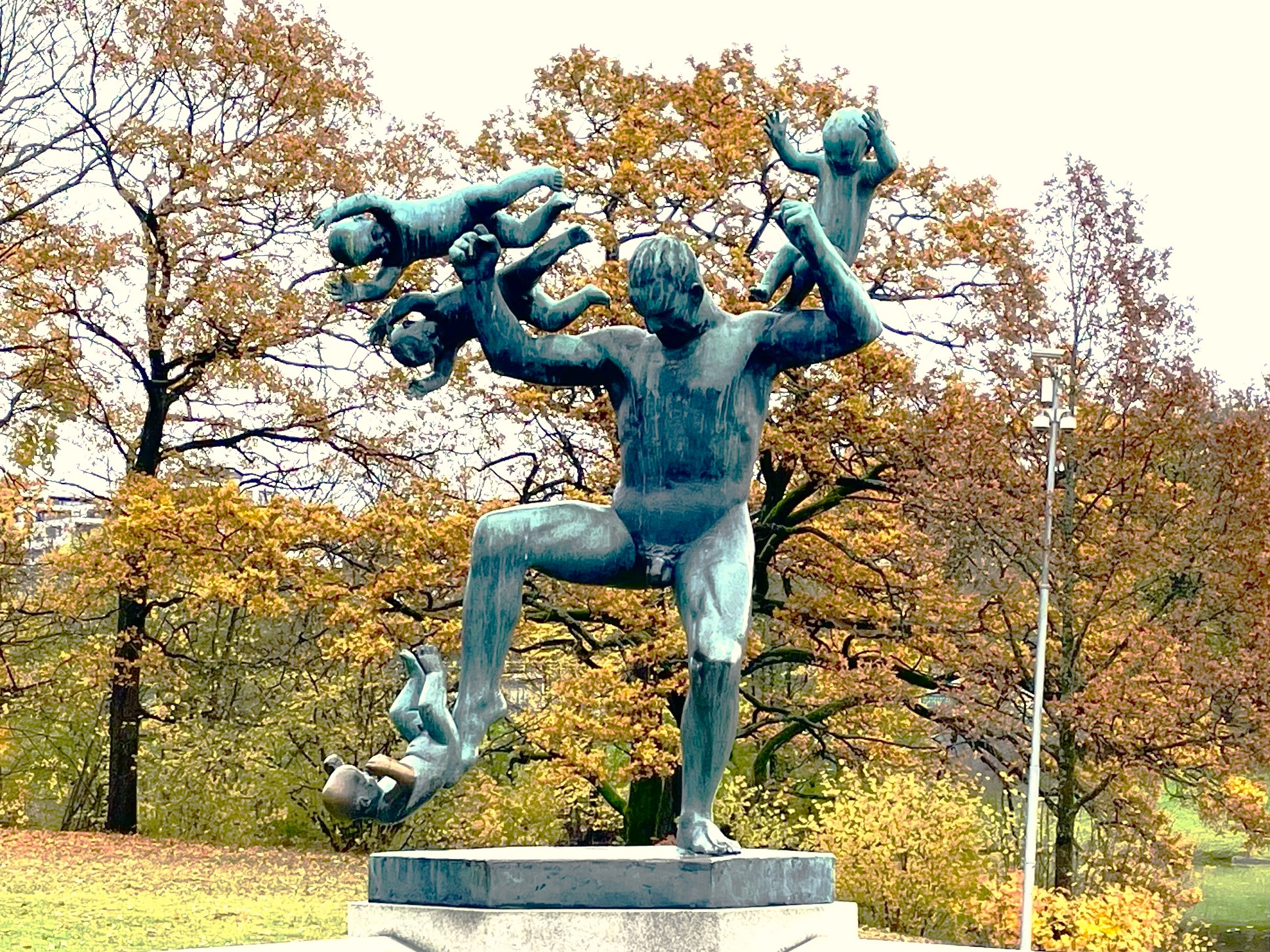
- Juggling children – something that must resonate with any parent
-
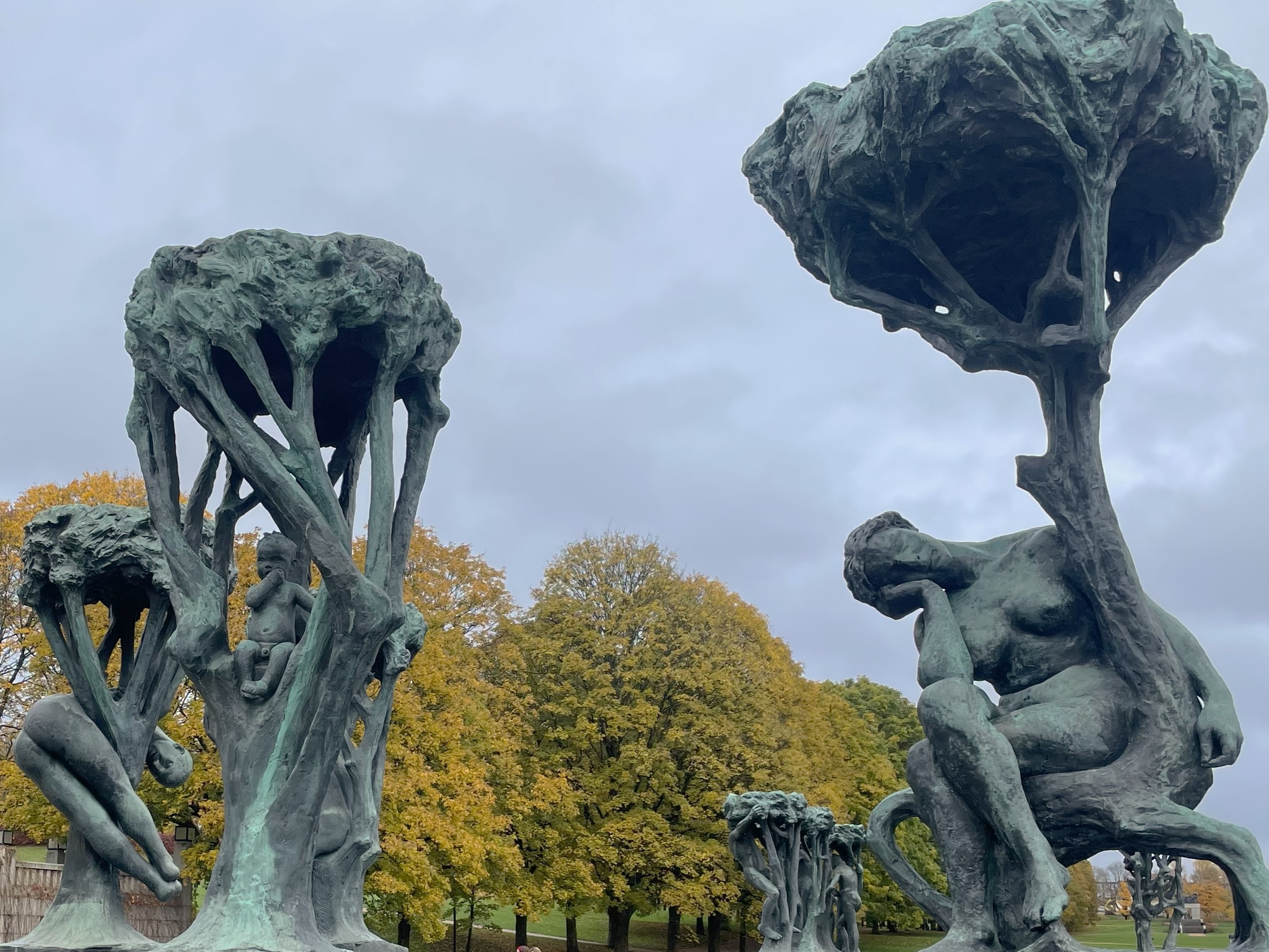
- Man in harmony with nature?
-
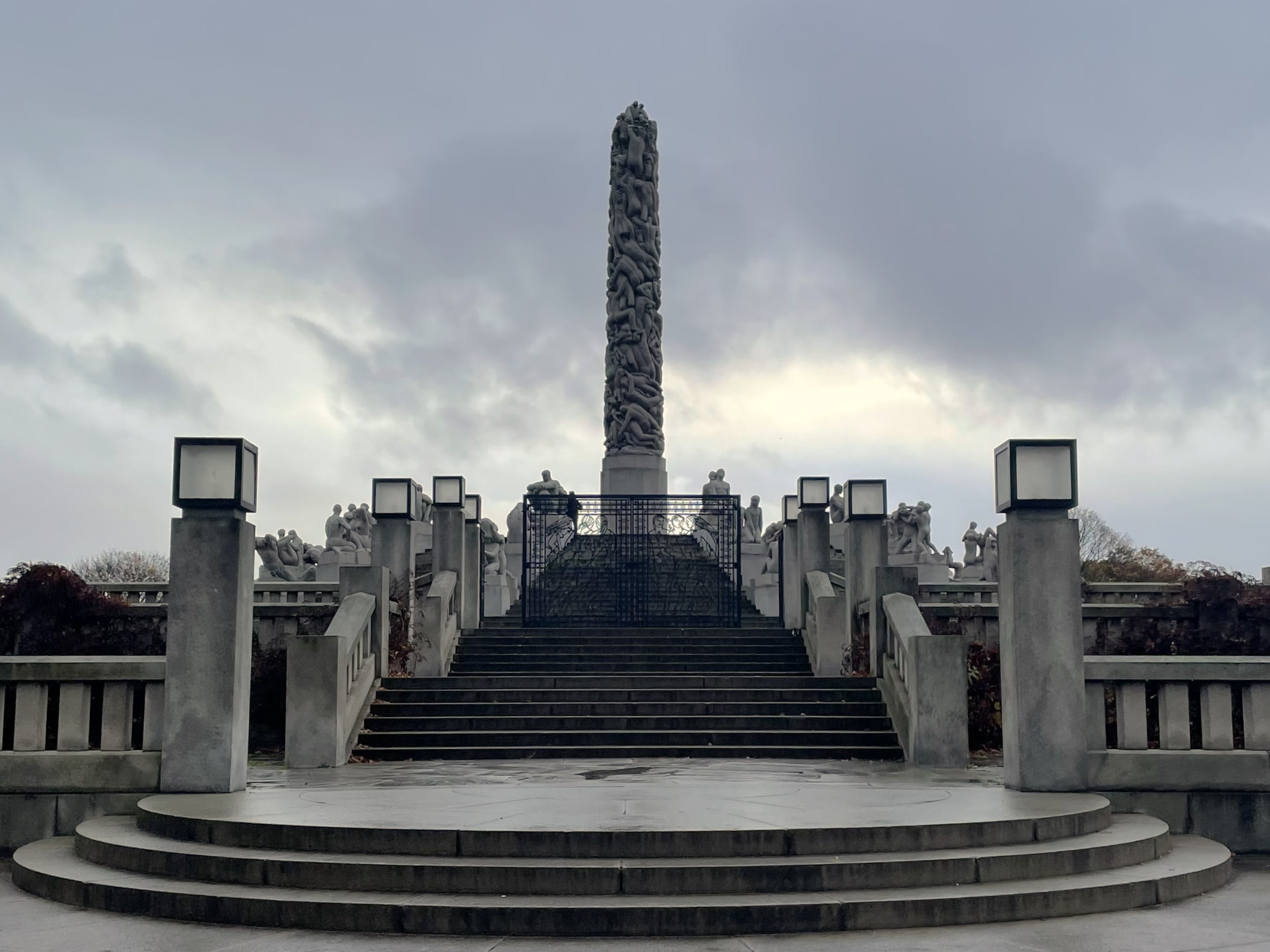
- The central pillar is made up of human forms all struggling to reach the pinnacle.
-
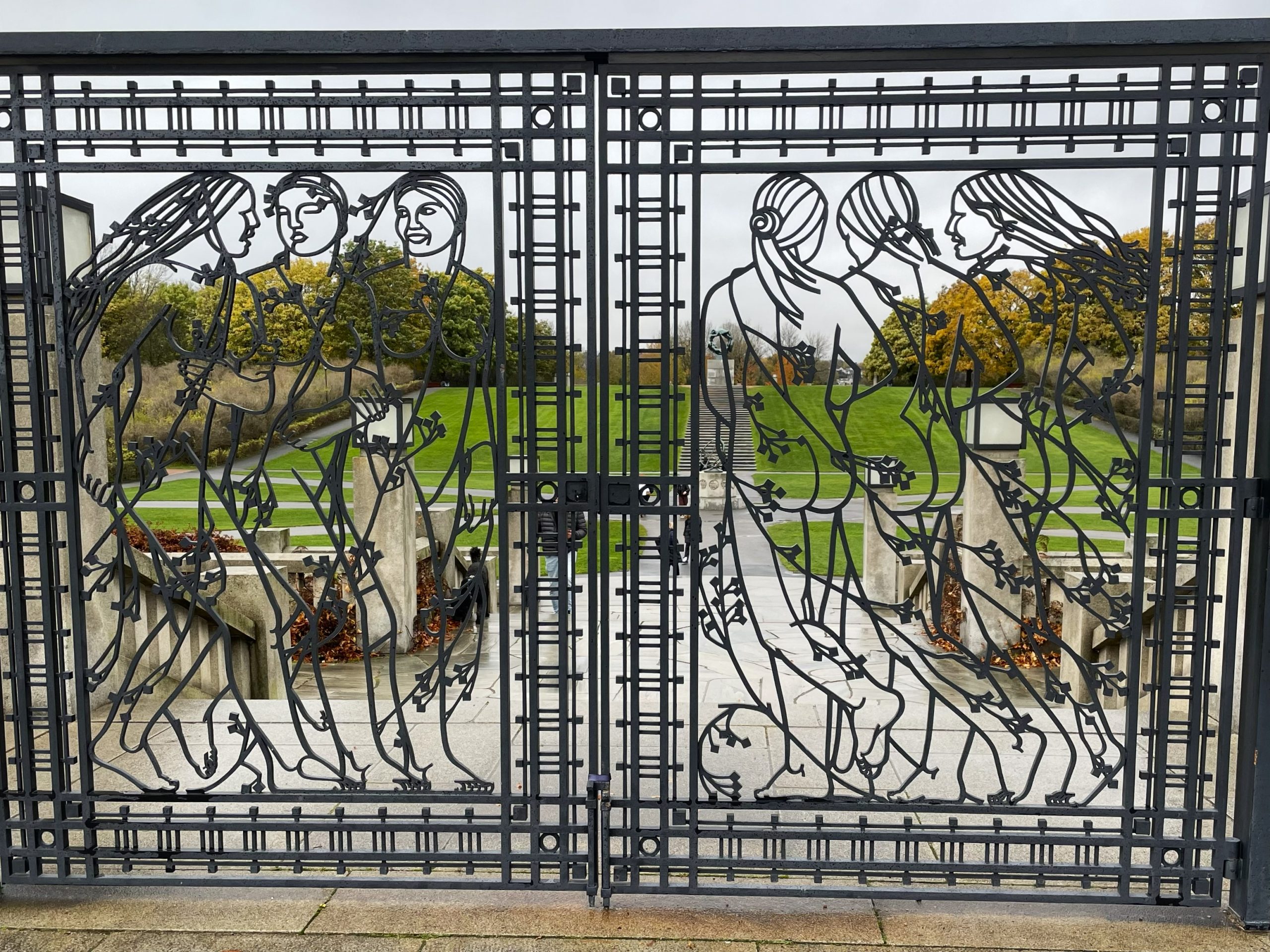
- These gates were a lot more whimsical.
The Fram Museum
From the sculptures we wandered through the rest of the park and into the streets of Oslo where we wanted to find a bus stop to take us out to the Fram museum.
The Fram Museum is located with a couple of other museums on a peninsular that juts out southwards into Oslofjord. It would have been a fair hike to walk there so we caught the bus using our day ticket. Again we didn’t have to show the ticket, just get on the busy bus which was full of tourists and locals alike heading down to the museums.
The Fram is most famous because it was the ship used by Roald Amundsen in his successful 1910 – 1912 expedition to reach the south pole. But before that the ship was built to the specification of another explorer (Nansen) – and was involved in two arctic expeditions before Amundsen took it on. Nansen’s expedition spent three years trapped in arctic ice although Nansen himself left the ship to try to trek to the pole. The early polar explorers really did know hardship, one of the things that makes their stories so compelling.
The Fram museum was an excellent experience, making up for the somewhat lacklustre Tromso museum. The museum, which explores the history of the Fram and polar exploration in general, is built around the ship of the same name which has been restored and can be explored from top to bottom. The museum was originally founded in the 1930s after the ship was first restored. I bet the current museum would be difficult to the 1930s team to conceive with it’s interactive exhibits including a flight simulator recreating Roald Amundsen’s aerial expedition over the North Pole, and a silly but fun polar simulator – a walk in freezer with models of the frozen corpses of polar explorers.
-
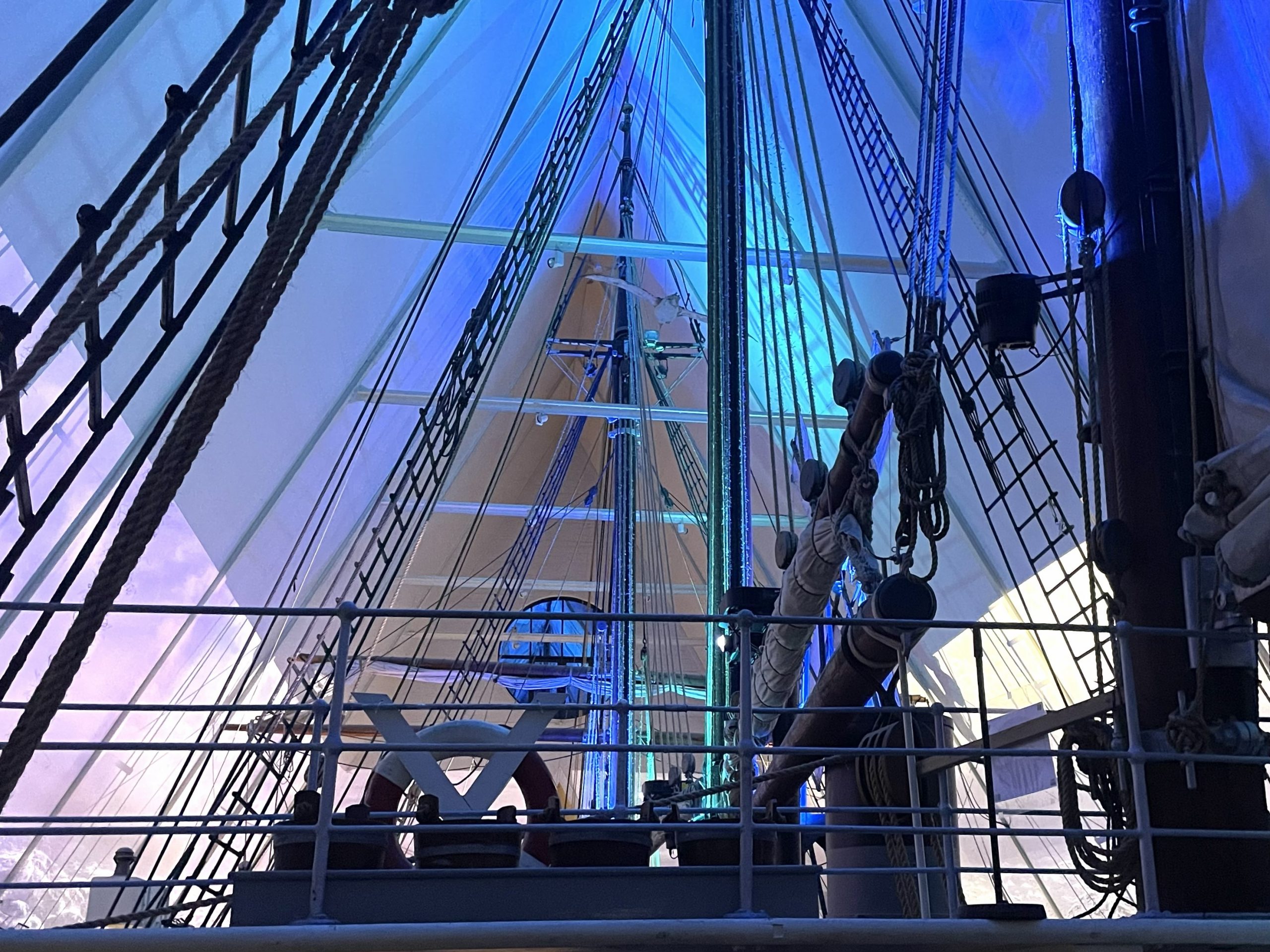
- On the deck of the Fram we were met with the sights and sounds of waves crashing over the ship and gales blowing through the rigging.
-
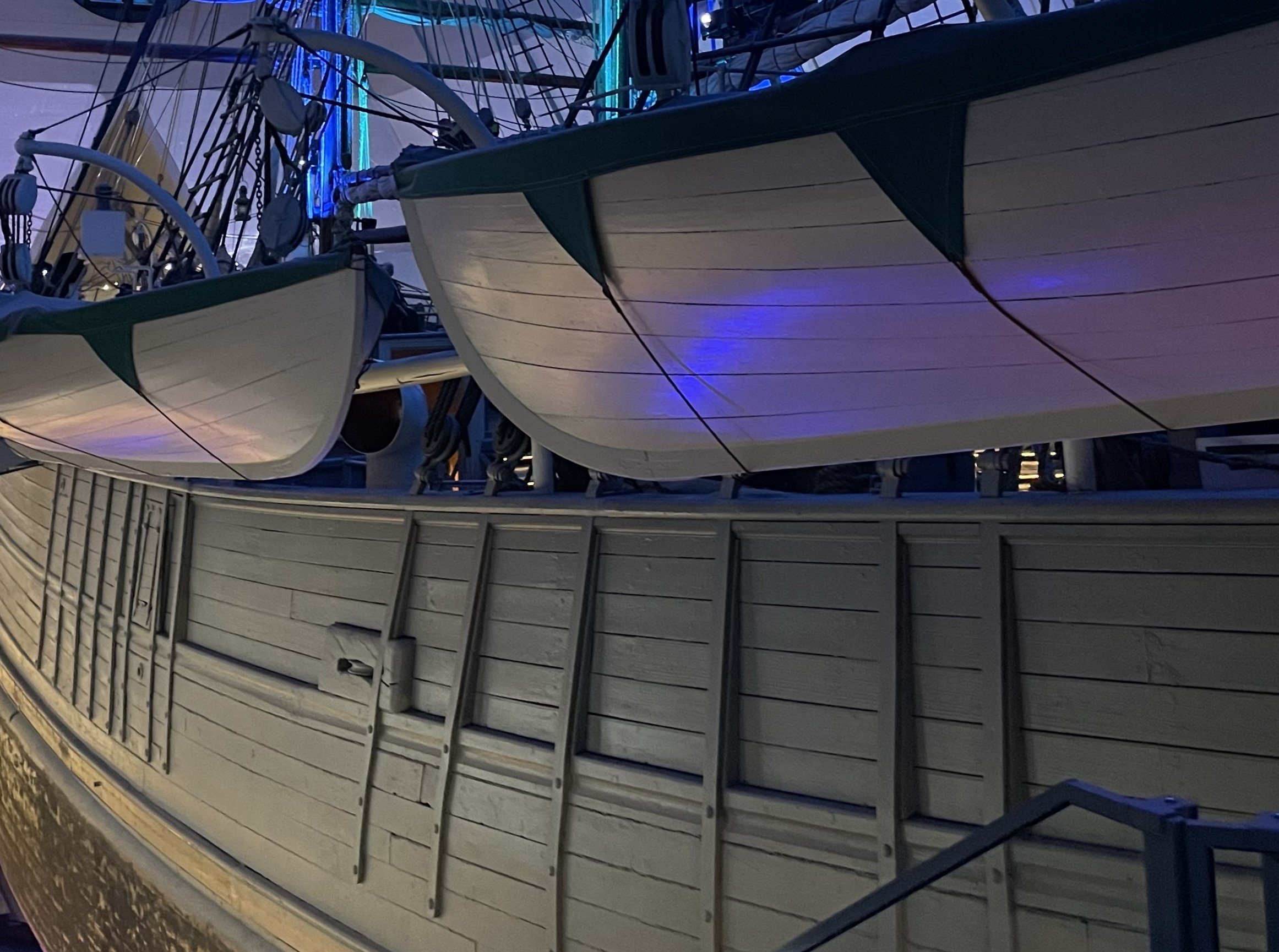
- Imagine being in the polar ocean on these tiny boats with not a dry suit to your name.
I could spend ages boring you about this museum and all of the things we saw and learned, but instead we would highly recommend you visit.
Back through Oslo
We got the bus back into Oslo centre where we decided we needed a late lunch/early dinner. As we strolled around the clean and quiet streets we saw groups of people dressed up for Oktoberfest. It’s not a huge thing here but a marquee was set up in the city for anyone brave enough to don lederhosen and dirndl to drink copious amounts of beer. On this Saturday afternoon it already seemed like a popular choice and although most groups were still sober I expect it would have been a little more boisterous later that night.
We eventually settled on one of the street food halls where we could choose from a wide variety of different cuisines. We settled down on a bench and picked on a variety of Thai and Carribean dishes washed down with a couple of drinks.
Once we were fed we continued our walk through the city back to a metro station. The parking area was still peaceful and we had a good night’s sleep. We debated whether we wanted to spend another day in Oslo, it’s got so much to offer, but decided to save that for another visit and move on closer to our ferry.